The Working Group No. 4 of the Provincial Party Committee’s Standing Board works to assess the results of work in communes and wards in the province.
On the morning of June 4, the Working Group No. 4 of the Provincial Party Committee’s Standing Board, led by Comrade Nguyen Manh Quyen, Deputy Secretary of the Provincial Party Committee and Chairman of the Provincial People's Committee, held a working session with the Standing Boards of the Party Committees of the wards of My Hao, Duong Hao, Thuong Hong, Pho Hien, Son Nam, Hong Chau, and the commune of Tan Hung.
 The delegates attend the working session.
The purpose of the working session was to assess the situation after one-year operation of the two-tier political system and local government in the localities; the situation of implementing and adjusting the general urban planning and rural planning after the reorganization of administrative units; the implementation results of Directive No. 18/CT-TTg dated May 8, 2026, of the Prime Minister on improving the quality of local officials and civil servants at the commune level to meet the requirements of the new situation (Directive No. 18) and Directive No. 21/CT-TTg dated May 20, 2026, of the Prime Minister on rearranging villages and residential areas (Directive No. 21); the arrangement, utilization, and implementation of regimes and policies for non-professional personnel at the commune, village, and residential area levels.
It saw the participation of members of the Provincial Party Committee’s Standing Board, leaders of the Provincial People's Council; leaders of several provincial departments and agencies, and leaders of relevant communes and wards.

 The delegates attend the working session.
Reports from the communes and wards indicate that after one-year operation, the local government apparatus has basically operated stably and smoothly; tasks have been implemented synchronously and effectively. The leadership and guidance of local Party committees and authorities have seen many positive changes; the handling of administrative procedures for citizens and businesses has been maintained promptly, without interruption. The staff and civil servants are gradually adapting to new task requirements, demonstrating a sense of responsibility and proactiveness in performing their duties.
In addition, localities have focused on reviewing and adjusting urban and rural planning to align with development orientations after administrative unit reorganization; actively implementing tasks according to Prime Minister's Directives No. 18 and No. 21. Digital transformation, administrative reform, and the development of e-government have received attention; national defense and security have been maintained, and social order and safety have been ensured. However, during the operation of the new model, there are still some difficulties and obstacles related to infrastructure, working equipment, land management, planning, staff allocation, high-quality human resources, and the organization and implementation of some socio-economic development tasks at the local level...
At the meeting, delegates focused on exchanging and discussing, clarifying the difficulties and obstacles arising in practice; at the same time, suggested that the province pay attention to investing in infrastructure and equipment to serve the work; have appropriate mechanisms and policies to attract, retain, and improve the quality of the staff and civil servants; accelerate the progress of planning and adjusting; strengthen decentralization and delegation of power associated with enhancing the responsibility of the heads of departments… Based on that, representatives of the provincial departments and agencies directly answered, guided, and proposed solutions to overcome difficulties and obstacles within their authority.
 Comrade Hoang Thai Phuc, Member of the Standing Board of the Provincial Party Committee and Head of the Provincial Party Committee's Internal Affairs Commission, speaks at the meeting.
 Comrade Pham Van Khue, Member of the Standing Board of the Provincial Party Committee and Head of the Provincial Party Committee's Organization Commission, speaks at the meeting.
 Comrade Vu Ngoc Tri, the Provincial Party Committee’s Member and Vice Chairman of the Provincial People's Council, speaks at the meeting.
 Comrade Tran Thi Thanh Thuy, Member of the Standing Board of the Provincial Party Committee, Secretary of the Party Committee and Chairwoman of the People's Council of My Hao ward, speaks at the meeting.
 Leader of the Department of Science and Technology speaks at the meeting.
 Leader of the Department of Internal Affairs speaks at the meeting.
 Leader of the Department of Agriculture and Environment speaks at the meeting.
 Leader of the Department of Finance speaks at the meeting.
 Leader of the Department of Construction speaks at the meeting.
 Leader of the Provincial People's Committee’s Office speaks at the meeting.
 Leader of Duong Hao ward reports at the meeting.
 Leader of Hong Chau ward reports at the working session.
 Leader of My Hao ward reports at the working session.
 Leader of Son Nam ward reports at the working session.
 Leader of Pho Hien ward reports at the working session.
 Leader of Tan Hung commune reports at the working session.
In concluding the working session, Comrade Nguyen Manh Quyen, Deputy Secretary of the Provincial Party Committee, Chairman of the Provincial People's Committee, and Head of Working Group No. 4, acknowledged and commended the achievements of the 7 communes and wards after one-year operation of the two-tier local government model. He affirmed that, despite many difficulties, the localities have made efforts and proactively implemented tasks, creating clear changes in leadership, direction, management, and service to the people, and the grassroots government apparatus is gradually operating more effectively and efficiently.
 Comrade Nguyen Manh Quyen, Deputy Secretary of the Provincial Party Committee and Chairman of the Provincial People's Committee, delivers a directive speech at the working session.
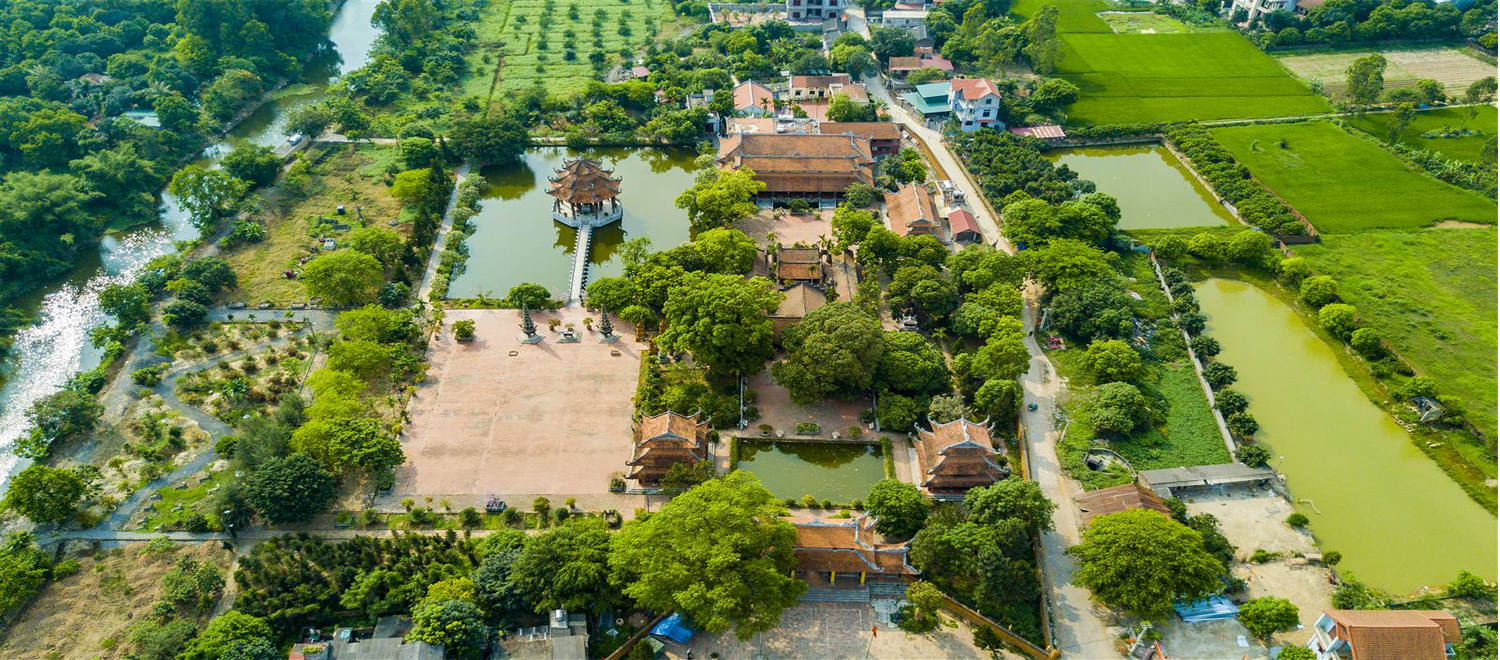
He emphasized that, according to the provincial planning, the development space is shaped with three growth poles, creating momentum to promote socio-economic development in the new period. Therefore, localities need to proactively study and thoroughly understand the planning orientations to concretize them into their local development programs and plans. He noted that the Pho Hien area needs to research and effectively exploit its cultural and historical values, promote the development of cultural industries associated with the preservation and promotion of the Pho Hien Heritage, and gradually become an important growth pole of the province.
He requested that localities accelerate the implementation of digital transformation, determined to complete the digitization of land data in the area; select a number of communes and wards as pilot areas for implementation first, and then expand it throughout the province; and continue to pay attention to investing in infrastructure, facilities, and equipment; ensuring a favorable working environment and conditions for cadres, civil servants, and public employees to work with peace of mind and dedication.
Regarding the implementation of Directive No. 18, the Deputy Secretary of the Provincial Party Committee and Chairman of the Provincial People's Committee requested that localities focus on building a team of cadres with sufficient qualities and capabilities to meet the requirements of the tasks in the new situation; the heads of Party committees and local governments must be responsible for the placement and use of cadres, ensuring that the right person is in the right job and maximizing the effectiveness of human resources. Regarding Directive No. 21, it is necessary to urgently review and classify communes and wards to assess the scale, level of development, and the level of responsiveness of the government apparatus; at the same time, to serve as a basis for formulating development policies.
He requested that departments, sectors, and localities continue to improve the effectiveness of coordination; for emerging tasks and recommendations, the lead agency and implementation deadline must be clearly identified, and progress must be regularly monitored and evaluated weekly to promptly urge and handle tasks that are behind schedule, linking the results of task implementation with the evaluation and ranking of cadres. Simultaneously, the province should promote the implementation of Resolution No. 57 of the Politburo, strengthen the application of science and technology, and promote digital transformation to connect and share data, effectively serving leadership, guidance, and management.
He requested that leaders of communes and wards continue to uphold their pioneering, exemplary, and decisive roles in leadership and guidance; build a united and cohesive team, enhance administrative discipline and order; be proactive and creative in implementing the province's policies and directives, with the people and businesses at the center of service, creating a favorable environment for development.
Regarding socio-economic development tasks, the Deputy Secretary of the Provincial Party Committee and Chairman of the Provincial People's Committee requested that localities continue to focus on attracting investment, accelerating the disbursement of public investment capital and non-budgetary investment; and concentrate on removing bottlenecks and obstacles, especially in land clearance work. The delegation emphasized the need to assign appropriate personnel to effectively support the implementation of this task. In addition, it is necessary to focus on implementing tasks related to the Provincial Steering Committee 515, poverty reduction, waste management, and providing clean water to the people, as well as synchronously carrying out tasks related to digital transformation, building a digital government, and a digital society.
Regarding ensuring security and order, he requested that localities proactively monitor the situation, promptly resolve incidents at the grassroots level, prevent the emergence of hotspots and complex incidents; and carry out comprehensive solutions to ensure political security and social order, maintaining a stable environment to serve socio-economic development.
Regarding the suggestions and proposals from localities, the delegation will compile them, report to the Provincial Party Committee’s Standing Board, and direct relevant departments and agencies to consider and resolve them within their authority.