The Provincial People’s Committee receives the progress report on key schemes and projects
On the morning of November 11, comrade Nguyen Manh Quyen, Deputy Secretary of the Provincial Party Committee and Chairman of the Provincial People’s Committee, chaired a meeting to review the progress of the comprehensive development scheme for the Bac Hung Hai irrigation system, as well as the infrastructure investment project aimed at socio-economic development and the reconstruction of the historic Pho Hien trading port.
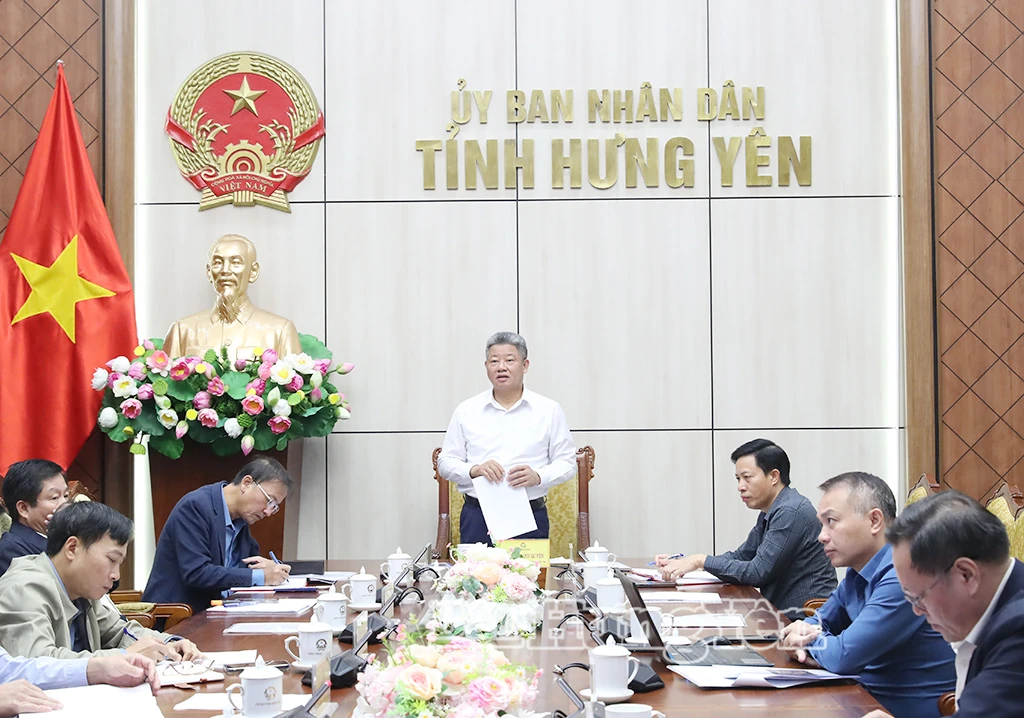
Comrade Nguyen Manh Quyen, Deputy Secretary of the Provincial Party Committee and Chairman of the Provincial People’s Committee, presides over the meeting.
In the attendance were comrade Vu Thanh Van, Member of the Provincial Party Committee’s Standing Board and Director of the Department of Industry and Trade; Vice Chairmen of the Provincial People’s Committee Nguyen Hung Nam and Lai Van Hoan; and representatives of relevant departments, agencies, and units.
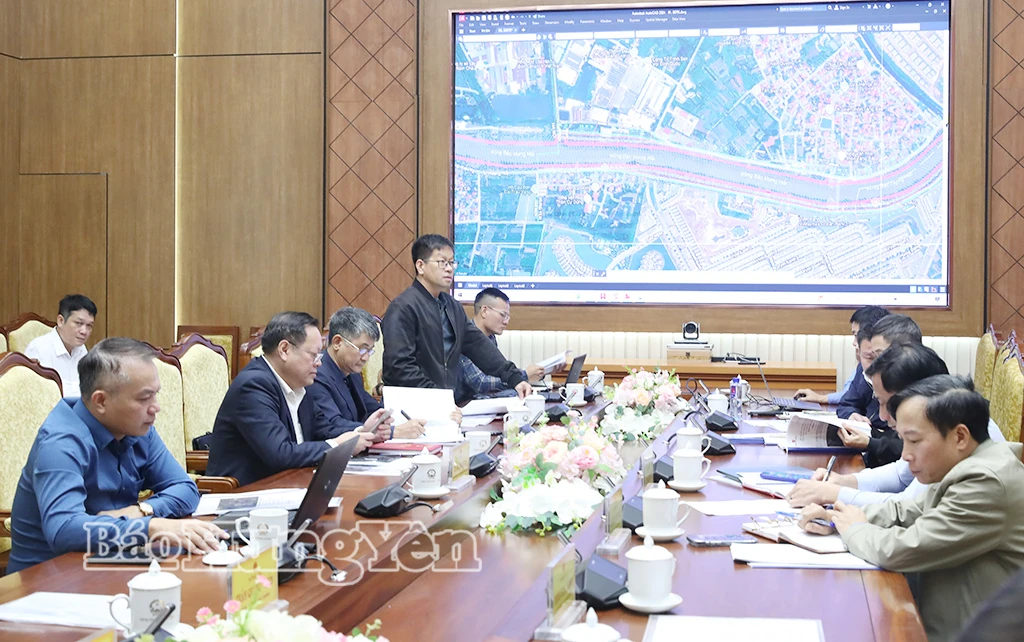
Leader of the Department of Agriculture and Environment reports on the progress of the comprehensive development scheme for the Bac Hung Hai irrigation system.
At the meeting, the Department of Agriculture and Environment provided an update on the implementation of the comprehensive development scheme for the Bac Hung Hai irrigation system, which is designed for multi-purpose use and sustainable environmental protection. Approved by the Ministry of Agriculture and Environement in October 2025, the scheme aims to enhance irrigation and drainage capacity, control environmental pollution, and effectively utilize the space and landscape along the main canal network.
Currently, the province is focusing on preparations for three key projects under this scheme, including the reinforcement of the Kim Son canal banks, combined with site improvements and the construction of a transport route spanning the section from the Bao Dap sluice gate to the Kenh Cau sluice gate. These include the project to renovate and dredge canals, culverts, and pumping stations to enhance the irrigation and drainage capacity of the Bac Hung Hai river system, as well as the project for the collection and treatment of wastewater in the Kim Son canal basin. Preparatory procedures for these projects are currently being finalized. Construction has already commenced on several facilities implemented by the Ministry of Agriculture and Rural Development and the provincial authorities. However, the implementation process faces challenges regarding the delineation of investment scopes, ensuring seamless connectivity between various project components, and balancing funding sources.
Concluding this discussion, Chairman of the Provincial People's Committee Nguyen Manh Quyen requested that the Department of Agriculture and Environment proactively coordinate with relevant departments, agencies, and units to conduct a comprehensive review of all tasks and projects under the scheme, work with the Ministry of Agriculture and Environment to reach a consensus and clearly define the investment scope, project segments, and specific components, distinguishing between those to be funded by the Ministry and those under the province's responsibility to avoid overlaps, redundancies, or omissions. Based on this, a list of projects should be compiled, along with a detailed plan, roadmap, and strategy for allocating capital according to priority. The processes of surveying, designing, and project planning must ensure consistency and synchronization in terms of scale, technical solutions, and infrastructure connectivity across segments managed by the Ministry and the province. Furthermore, the reinforcement and upgrading of the canal system should be integrated with transport development, urban landscape enhancement, and environmental pollution mitigation, ensuring investment efficiency and alignment with available resources.
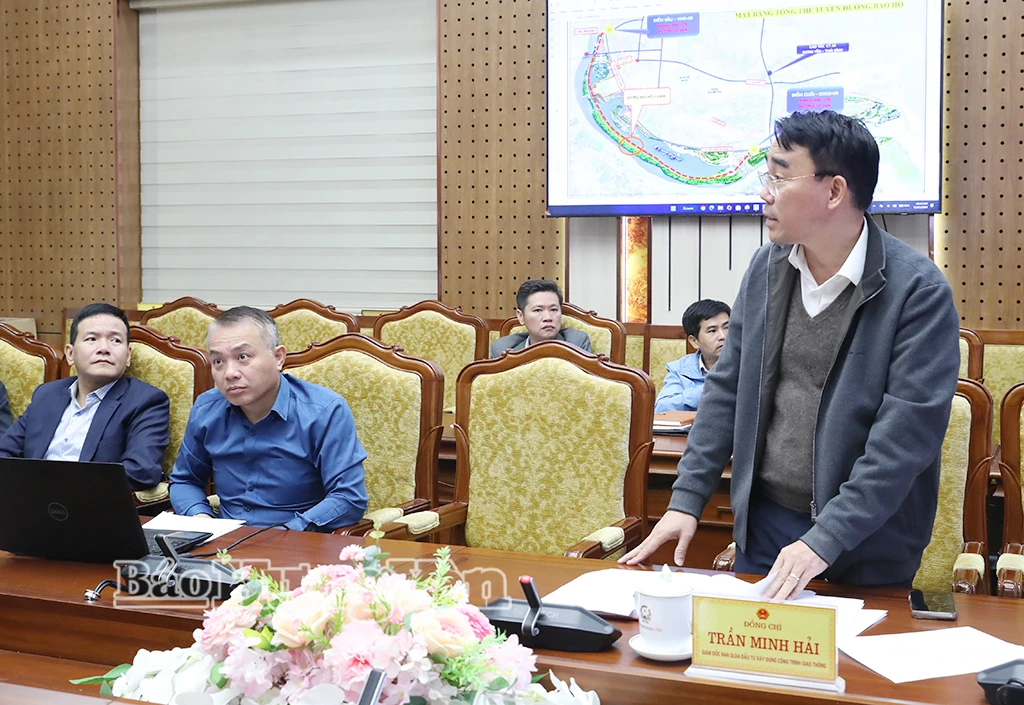
Leader of the Provincial Management Board for Transport Infrastructure Construction Projects reports on the progress of the infrastructure development project aimed at socio-economic growth and the reconstruction of the historic Pho Hien trading port.
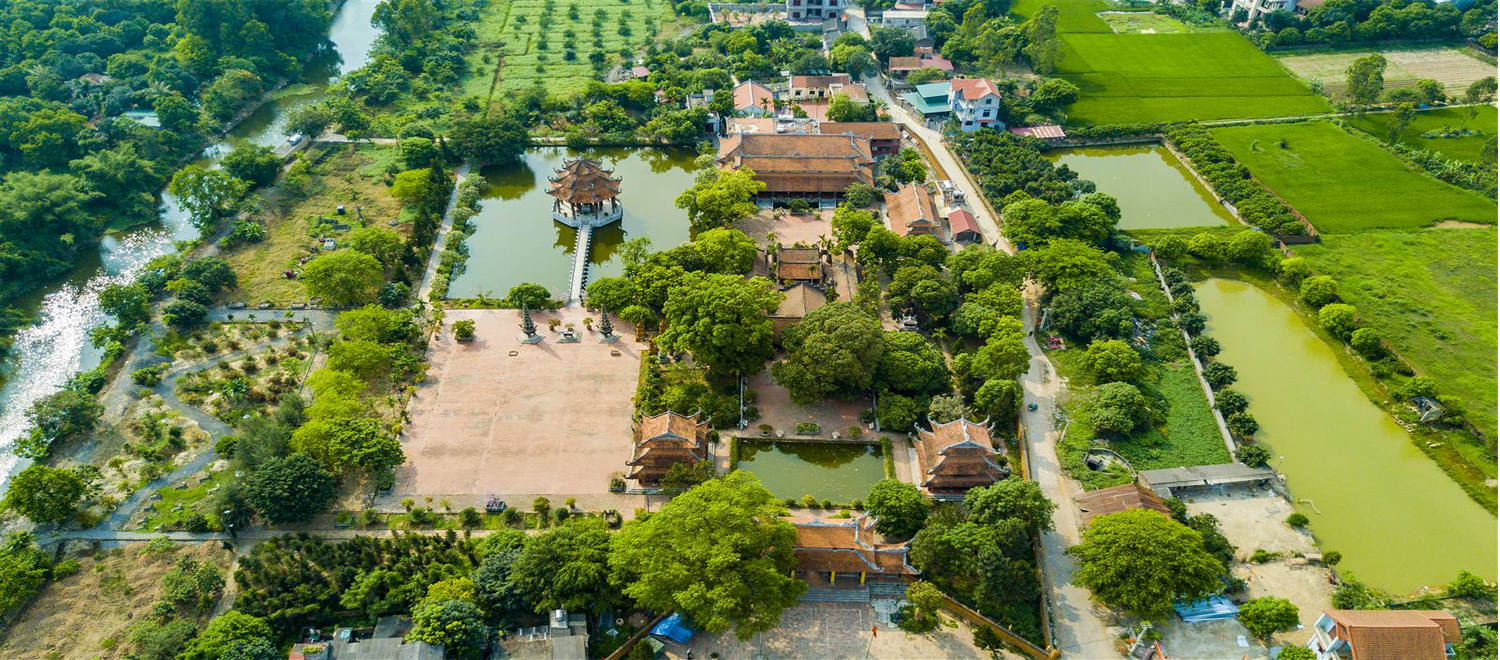
Regarding the investment project for the construction of socio-economic infrastructure, which includes the recreation of the historic Pho Hien trading port, the Management Board for Transport Infrastructure Construction Projects reports a total investment of nearly VND 6.8 trillion. The project is scheduled for implementation between 2026 and 2029 across the wards of Son Nam, Pho Hien, and Hong Chau. Key components include a roughly 10-kilometer perimeter road around a landscape lake, which will connect to a broader network linking cultural heritage sites, tourism, and economic development zones along the Red River. The project also entails excavating and dredging the landscape lake, constructing lake embankments, and developing comprehensive technical infrastructure.
To date, local authorities have extracted land parcel records for approximately 380 hectares slated for acquisition; they are currently proceeding with site clearance procedures and preparing resettlement areas. Meanwhile, consultants are conducting surveys and impact assessments, specifically regarding water flow and flood drainage capacity of the Red River, to finalize the alignment of the perimeter road and the precise scope of land acquisition.
Concluding this discussion, Chairman of the Provincial People’s Committee Nguyen Manh Quyen directed relevant departments, agencies, local authorities, and the project owner to accelerate project implementation and urgently finalize all investment preparation documentation and procedures in accordance with regulations. Local authorities are tasked with proactively managing site clearance, defining the scope of land acquisition, and preparing for resettlement. They must also promptly address any obstacles to ensure that cleared land is ready for construction once the project meets all requirements for commencement. Furthermore, coordination among departments, agencies, local authorities, and the project owner must be strengthened to resolve issues concerning planning, land use, and funding. To clearly define the responsibilities of each agency and unit, and develop a specific implementation plan and roadmap to ensure progress, quality, and investment efficiency.