The Provincial People’s Committee reviews the progress of waste treatment projects and the handling of accumulated domestic waste
On the afternoon of November 17, comrade Nguyen Manh Quyen, Deputy Secretary of the Provincial Party Committee and Chairman of the Provincial People’s Committee, chaired a meeting to hear a report of the Department of Agriculture and Environment regarding the implementation progress of waste treatment projects at the province’s three centralized waste treatment complexes, as well as the status and progress of handling accumulated domestic waste across the province.
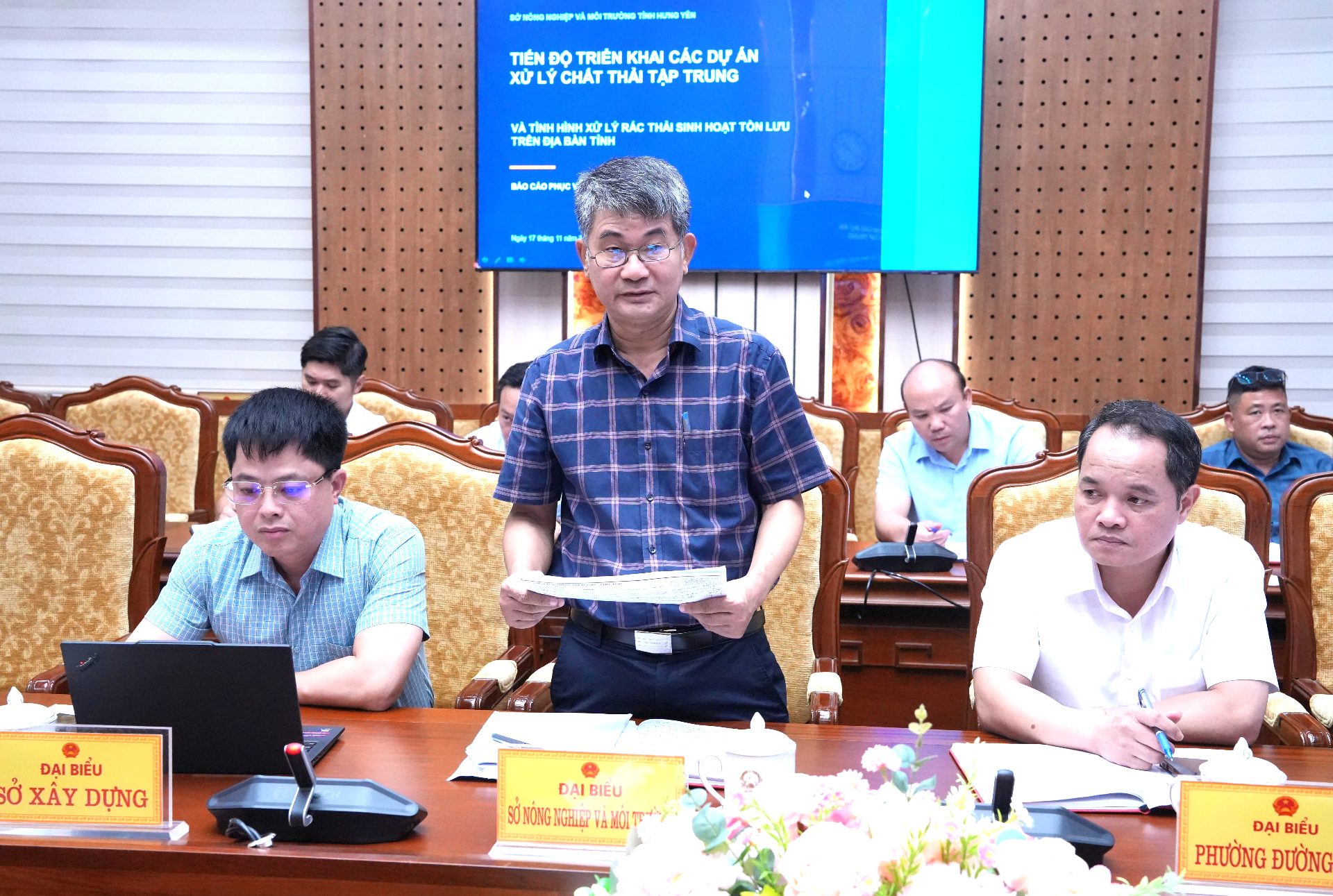
Leader of the Department of Agriculture and Environment provides a report at the meeting.
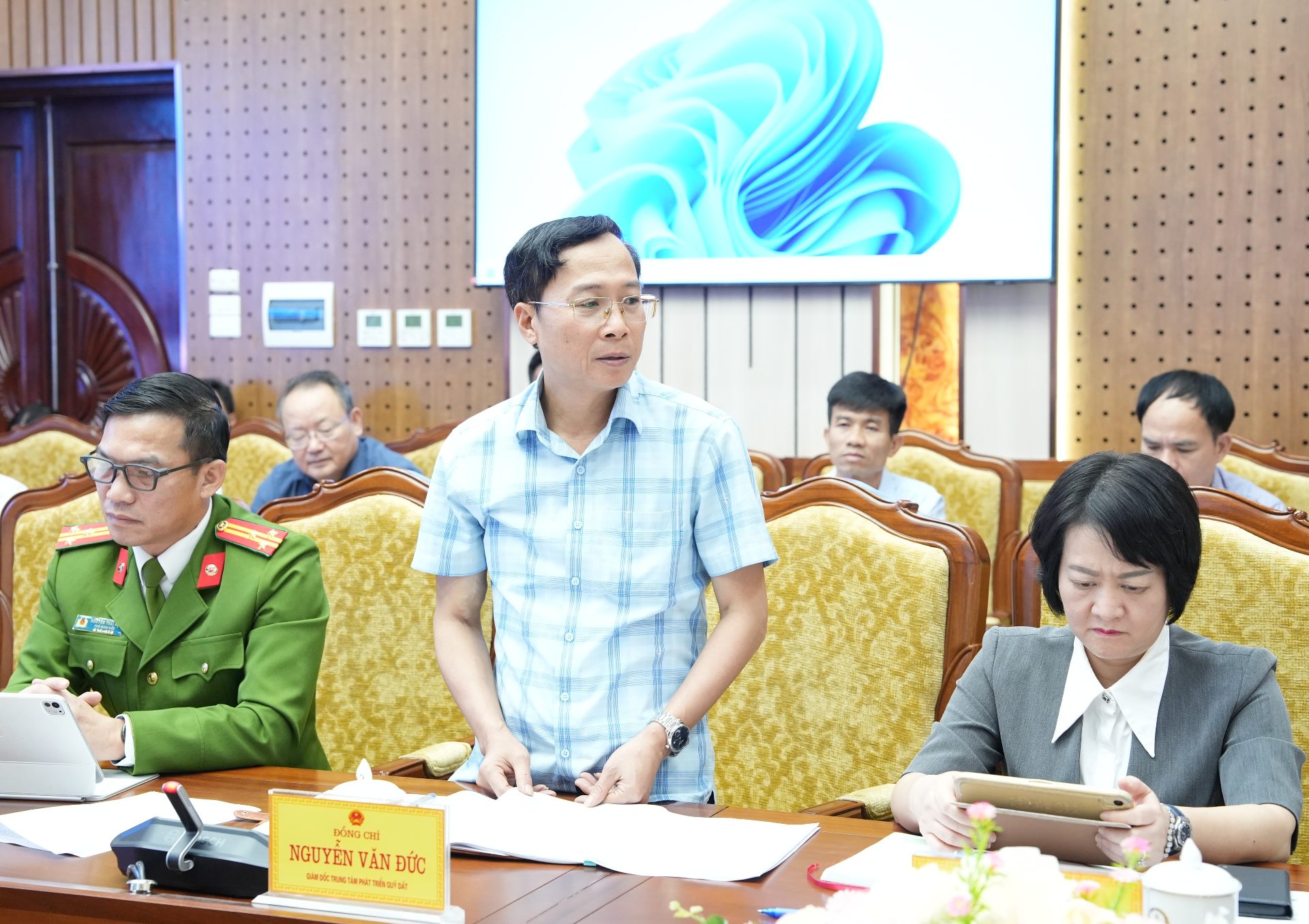
Leader of the Provincial Land Fund Development Center provides a report at the meeting.
According to the report of the Department of Agriculture and Environment, the province has planned for three centralized waste treatment complexes as follows: the Dai Dong Waste Treatment Complex in Dai Dong commune (covering 30 hectares, serving the northern communes and wards); the Doan Dao Waste Treatment Complex in Doan Dao commune (covering 50 hectares, serving the central region); and the Thuy Trinh Waste Treatment Complex in Thai Thuy commune (covering 60 hectares, serving the southern part of the province). These complexes are designed to process hazardous waste, industrial waste, domestic waste, waste materials, sludge, and septage.
Currently, the Dai Dong Waste Treatment Complex hosts two projects: the Dai Dong Waste-to-Energy Plant, invested in by the Industrial and Urban Environment Joint Stock Company No. 11 (Urenco 11) in collaboration with Thuan Thanh Environment Joint Stock Company, with a capacity of 600 tons per day; and a waste treatment plant invested in by T&T Industrial Environment Joint Stock Company, also with a capacity of 600 tons per day. At the Doan Dao Waste Treatment Complex, the Phu Cu Waste-to-Energy Plant, invested in by Thien Y - Huy Anh Environmental Energy Joint Stock Company, has a capacity of 1,600 tons per day. At the Thuy Trinh Waste Treatment Complex, a project for a modern solid waste incineration-to-energy plant, invested in by Long Hung Green Energy Co., Ltd., has a capacity of 600 tons per day.
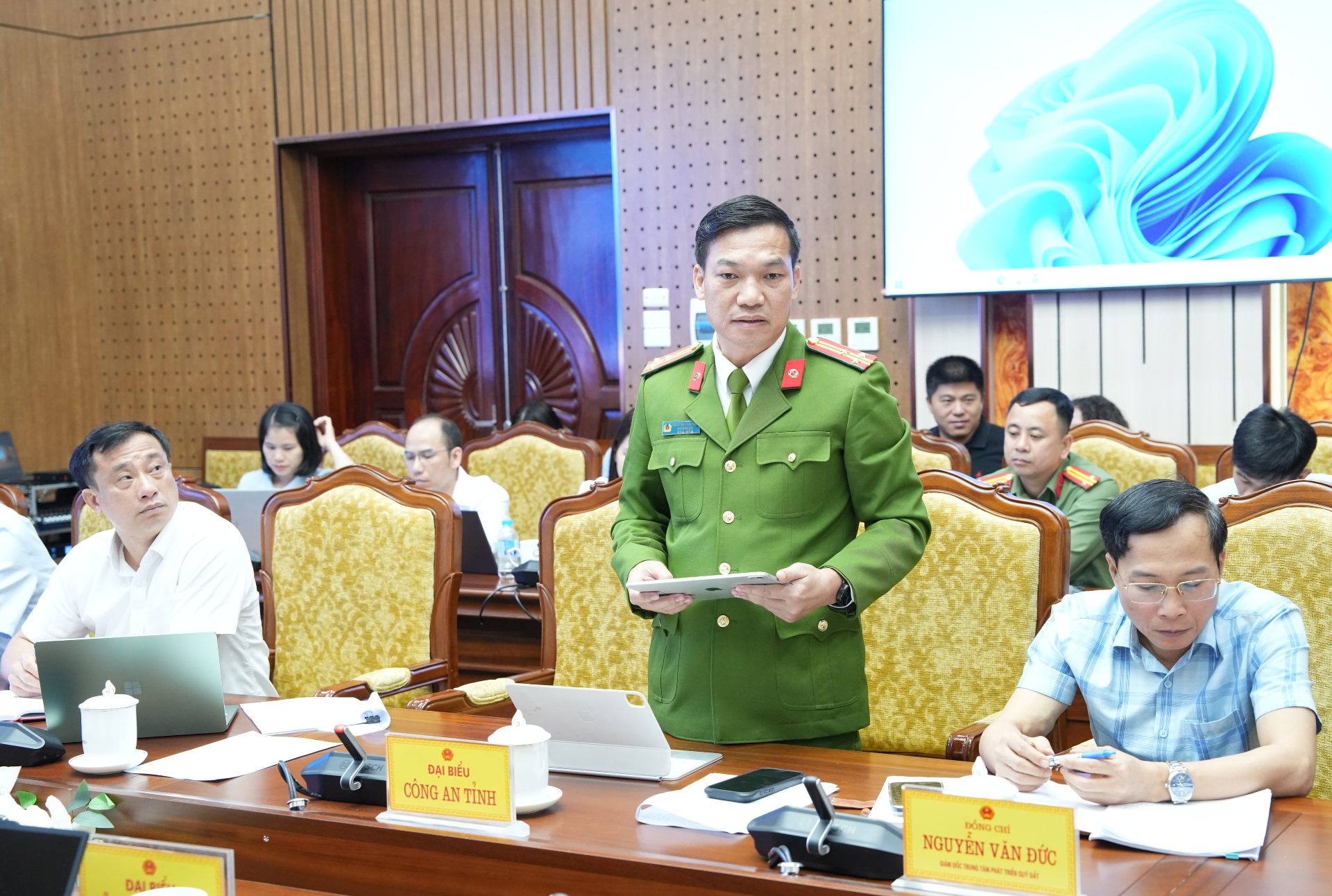
Leader of the Provincial Public Security reports at the meeting.
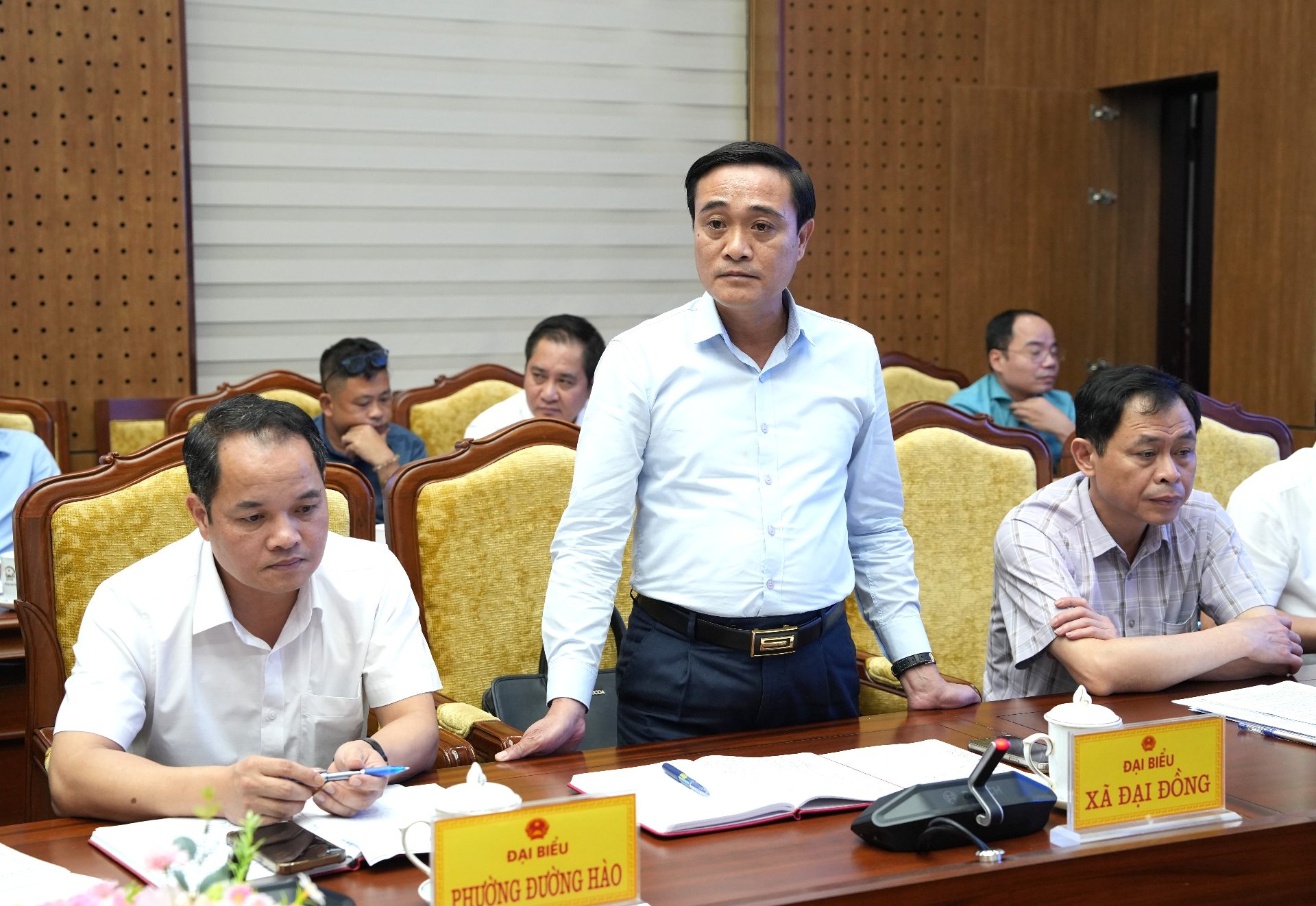
Leader of Dai Dong commune reports at the meeting.
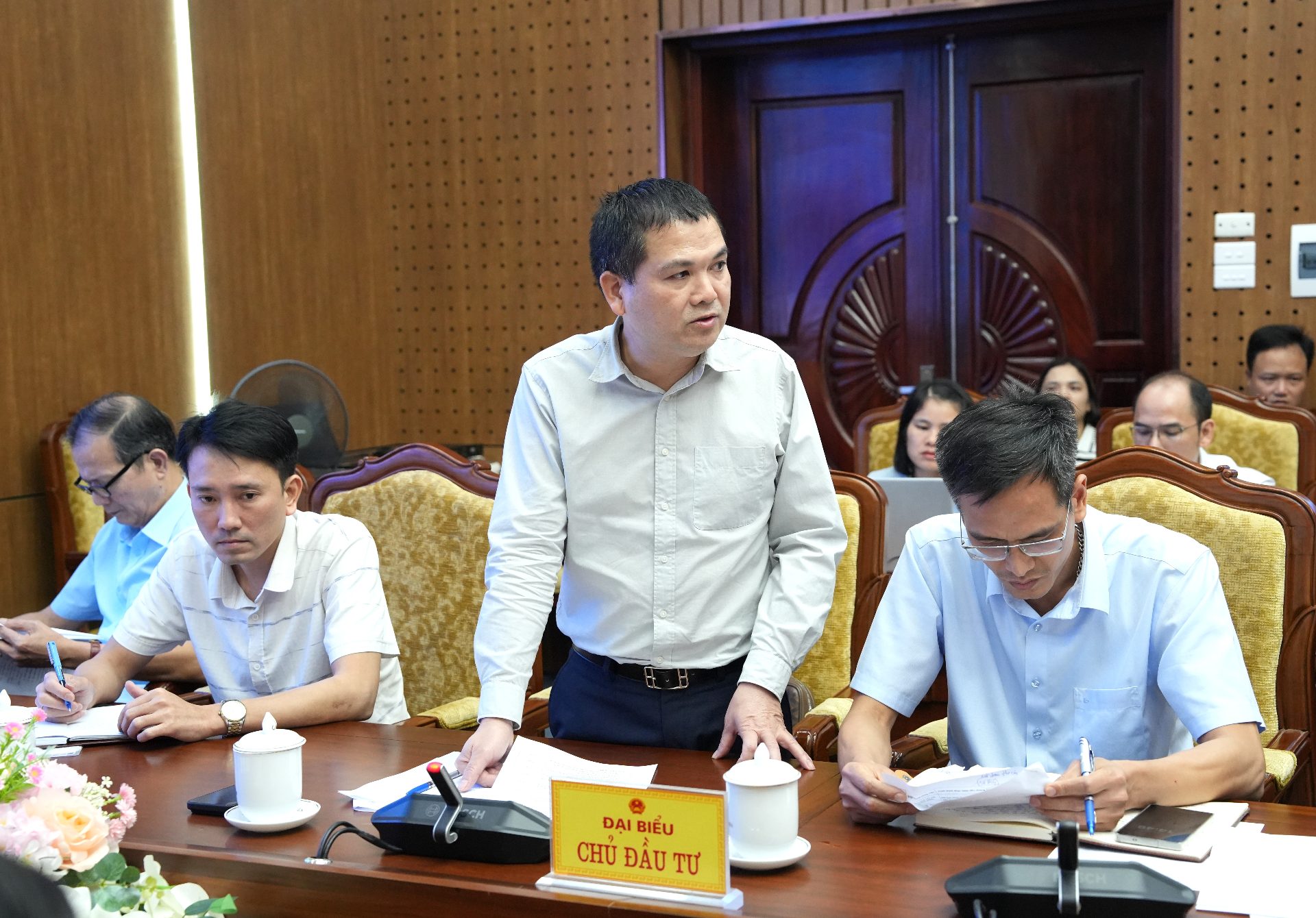
A representative of the project investors reports at the meeting.
To date, all four projects have received the approval for their investment policies; three have completed procedures for land allocation or leasing; and one has been granted both a construction permit and an environmental permit. However, none of the projects have yet commenced construction on their primary facilities, nor have they installed the necessary technological lines or waste-processing equipment. Additionally, Asian Bac Giang Green Energy Environment Joint Stock Company has proposed investing in a short-term waste-processing line, with a minimum capacity of 1,500 tons per day at the Di Su Waste Treatment Complex (in Duong Hao ward) to help address the backlog of waste currently accumulating within the province.
During the meeting, delegates assessed the progress of these projects, identified existing challenges and obstacles, and proposed solutions to expedite investment, accelerate project timelines, and bring the plants into operation as soon as possible to meet the requirements for waste treatment and environmental protection.
.jpg)
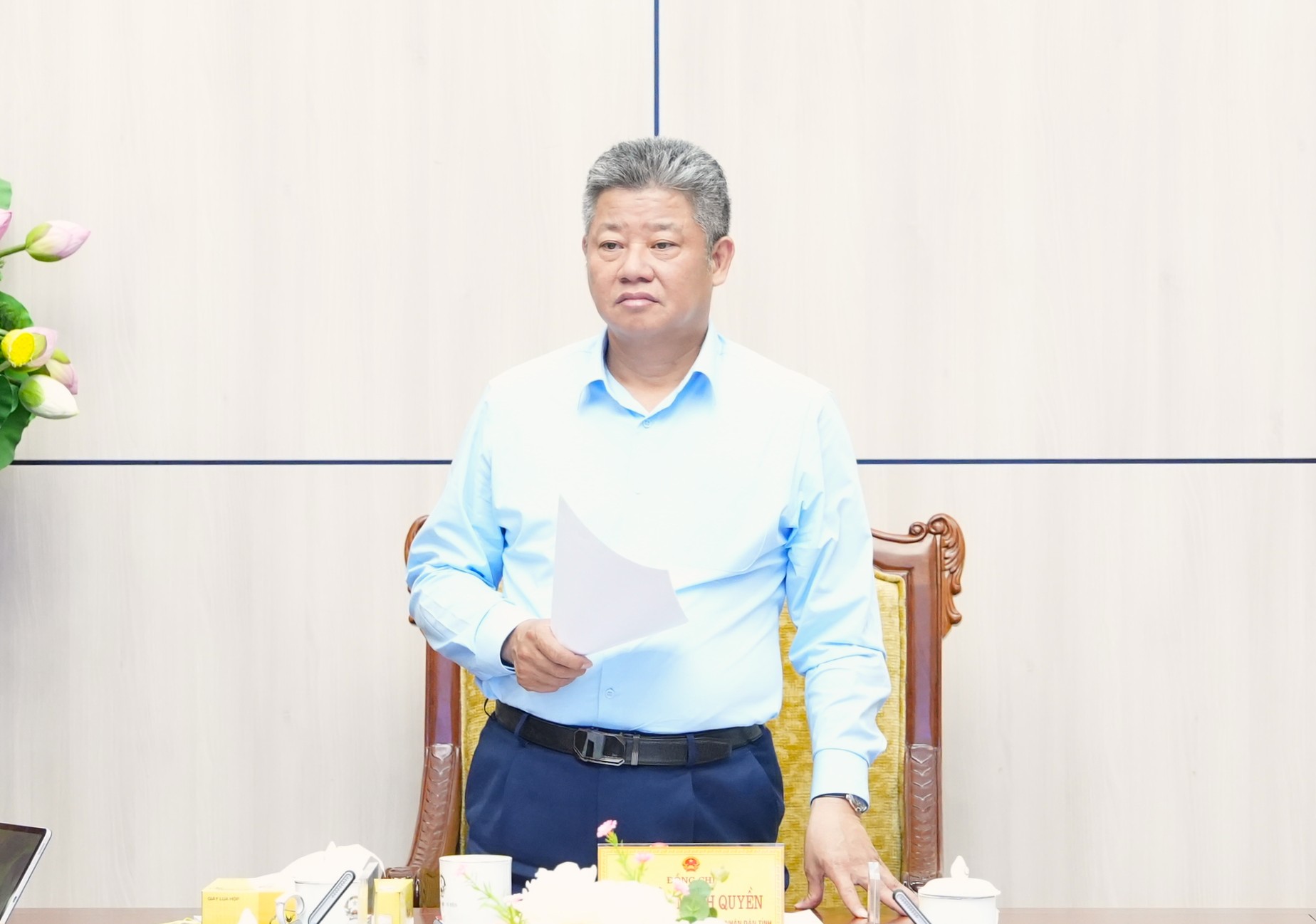
Comrade Nguyen Manh Quyen, Deputy Secretary of the Provincial Party Committee and Chairman of the Provincial People's Committee, delivers directives at the meeting.
Concluding the meeting, comrade Nguyen Manh Quyen, Deputy Secretary of the Provincial Party Committee and Chairman of the Provincial People's Committee, emphasized that waste management, environmental sanitation, and the provision of clean water are urgent tasks that directly impact the lives and health of the public. While the province has clearly defined its orientation, solutions, and implementation roadmap, the progress of projects involving centralized waste treatment facilities, utilizing modern technology remains slow, which has hindered waste processing capacity and affected environmental quality in the region.
He urged departments, agencies, and local authorities to enhance their sense of responsibility, take a proactive and hands-on approach, and act decisively in carrying out their assigned duties. Furthermore, he called for stronger coordination to promptly assist businesses in overcoming obstacles, while accelerating the processing of procedures related to construction, land, and environmental requirements. The People's Committee of Doan Dao commune must focus on finalizing site clearance and completing the procedures for land allocation and leasing for the remaining four hectares designated for the Phu Cu Waste-to-Energy Plant project, which is carried out by Thien Y - Huy Anh Environmental Energy Joint Stock Company, with a completion deadline of November 23, 2026.
He directed project investors to urgently finalize all documentation and procedures under their purview. They must proactively allocate sufficient resources to focus on the construction of project components, the installation of technological production lines, and the setup of waste treatment equipment, ensuring that the committed timelines are met. All enterprises are required to ensure their plants are operational no later than December 31, 2027; specifically, the Phu Cu Waste-to-Energy Plant must be completed by September 30, 2027. Regarding the Asian Bac Giang Green Energy Environment Joint Stock Company, it was requested that the enterprise expedite the completion of relevant procedures and urgently proceed with the installation of production lines and equipment, so that it may soon begin processing the accumulated waste within the province.
The Deputy Secretary of the Provincial Party Committee and Chairman of the Provincial People’s Committee tasked the Department of Agriculture and Environment, in coordination with the Department of Finance and other relevant departments, agencies, and local authorities, with conducting a comprehensive review and assessment of waste treatment projects in the province that are behind schedule, and proposing solutions for addressing them. Local authorities are directed to strengthen management and organize the collection and treatment of domestic waste in accordance with regulations; they must take firm action to prevent the illegal burning or dumping of waste, which causes environmental pollution and negatively impacts the lives of the public.