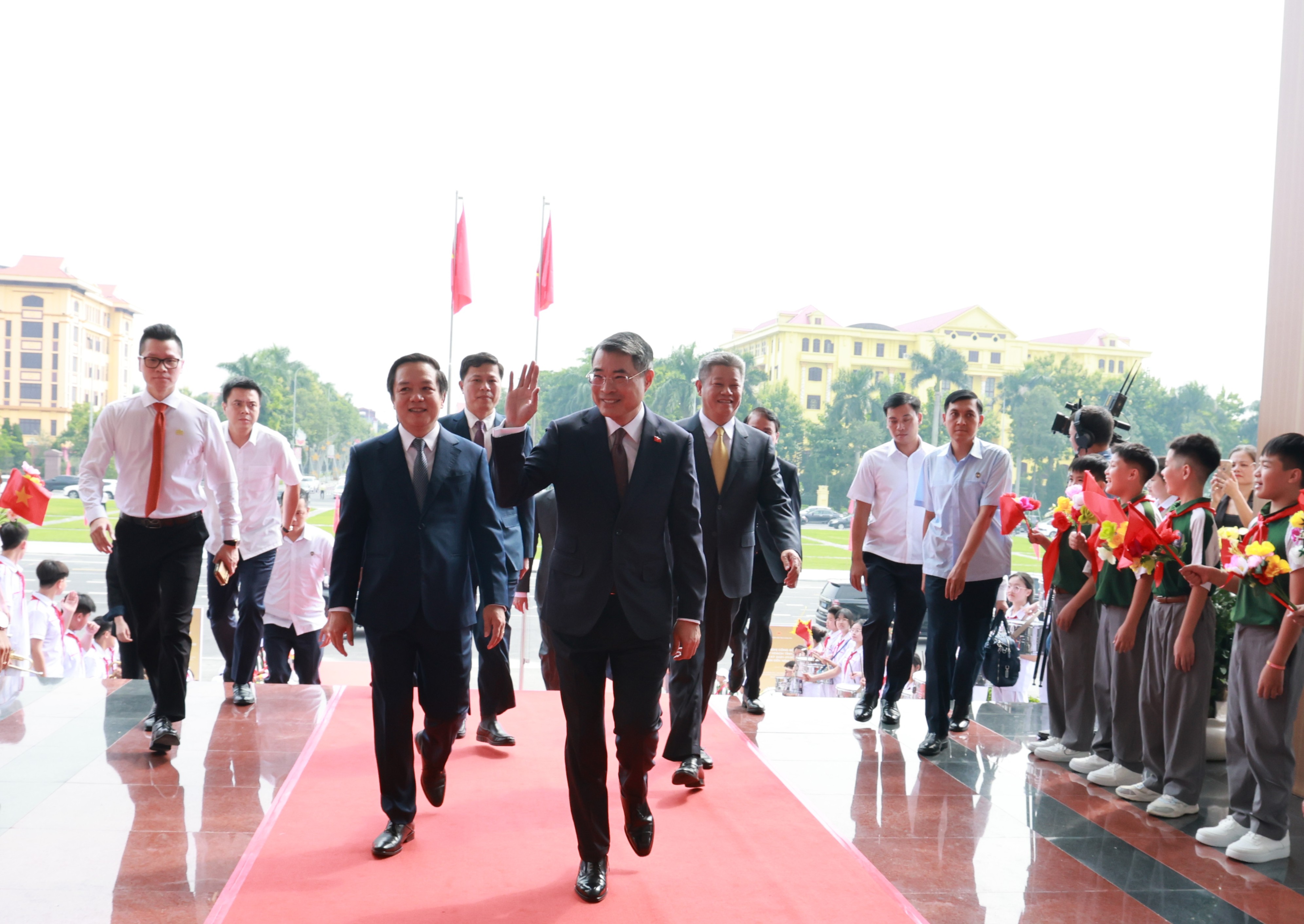
Prime Minister Le Minh Hung attends the conference announcing the Hung Yen Provincial Master Plan for the 2021–2030 period, with a vision toward 2050.
On the afternoon of October 12, the Hung Yen Provincial People’s Committee held a conference at the Provincial Convention Center, to announce the Hung Yen Provincial Master Plan for the 2021–2030 period, with a vision toward 2050. Comrade Le Minh Hung, Politburo member and Prime Minister, attended the event and delivered a directive speech.
Prime Minister Le Minh Hung, Politburo member, and provincial leaders, attend the conference to announce the Provincial Master Plan.
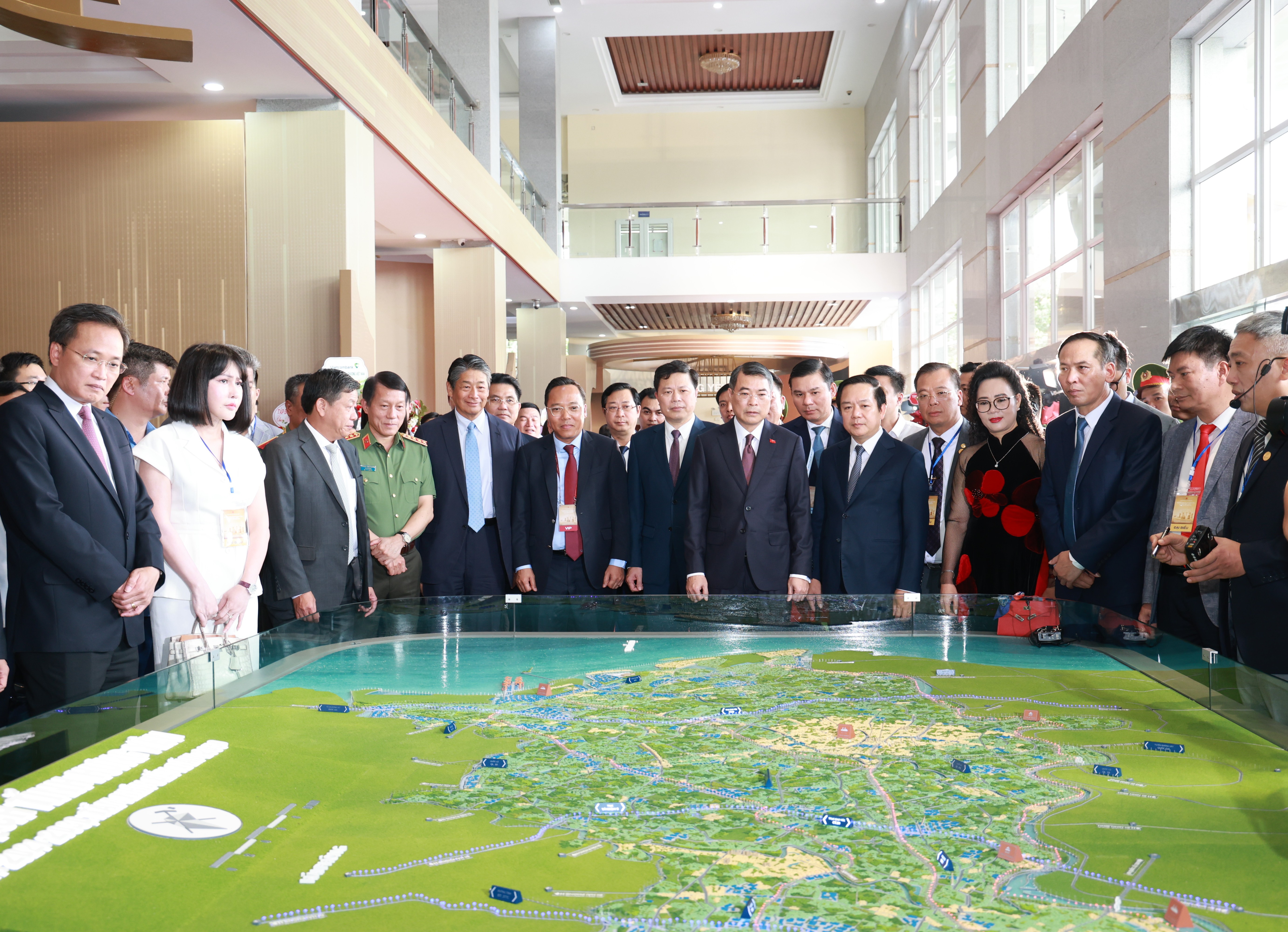
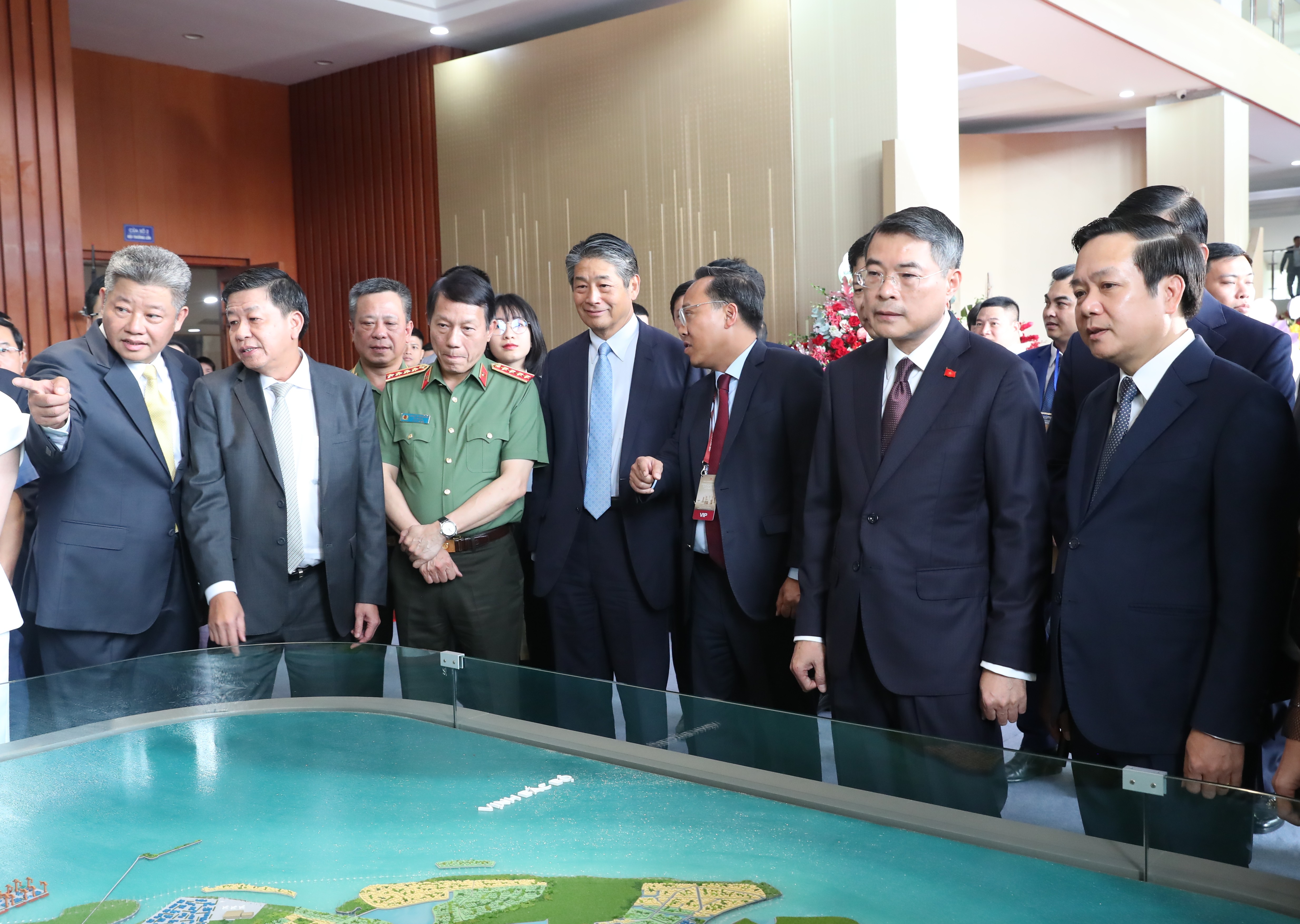
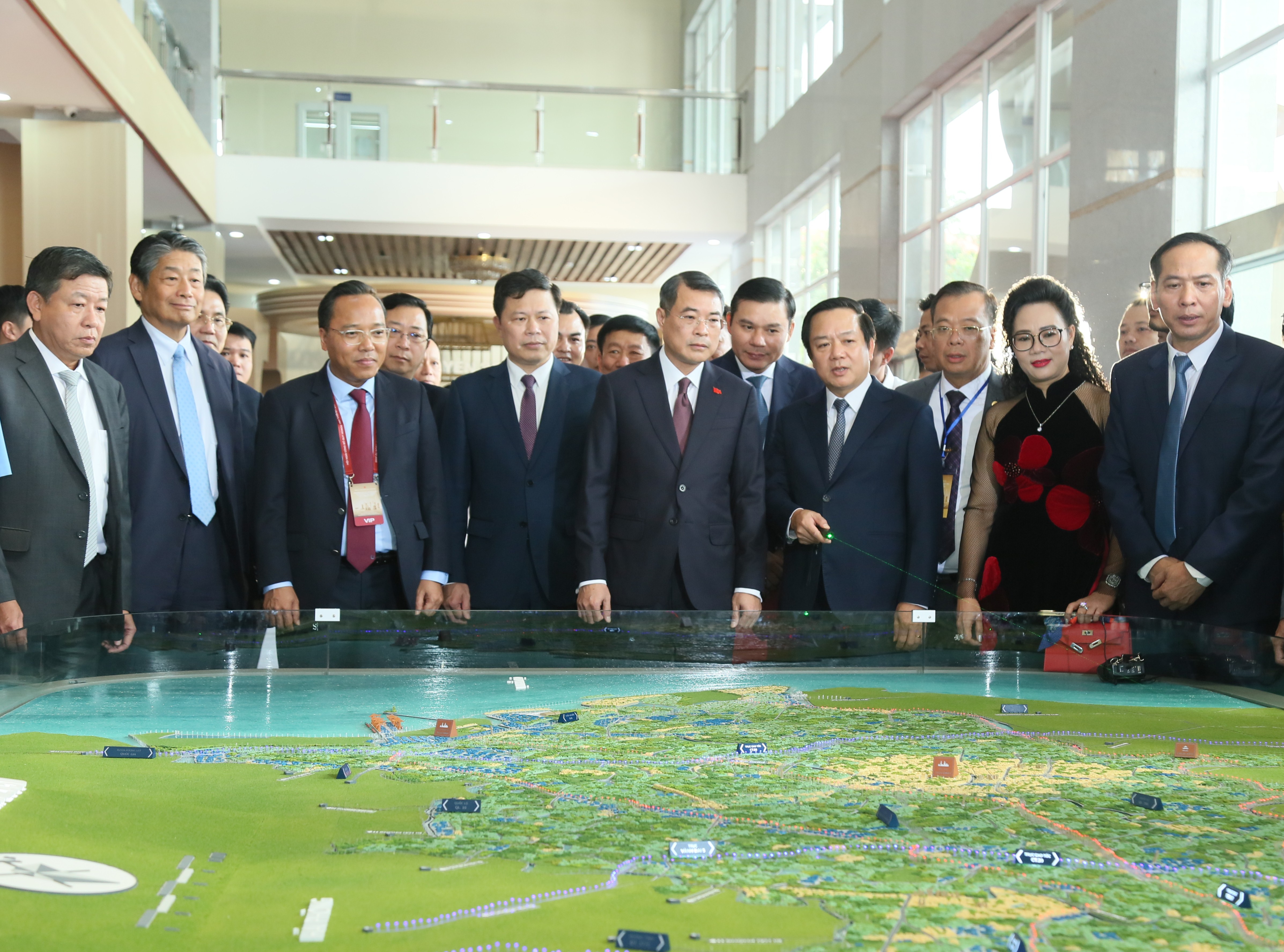
Prime Minister Le Minh Hung, Politburo member, and the Party and State leaders, provincial leaders, and other delegates, view the scale model of the Hung Yen Provincial Master Plan.
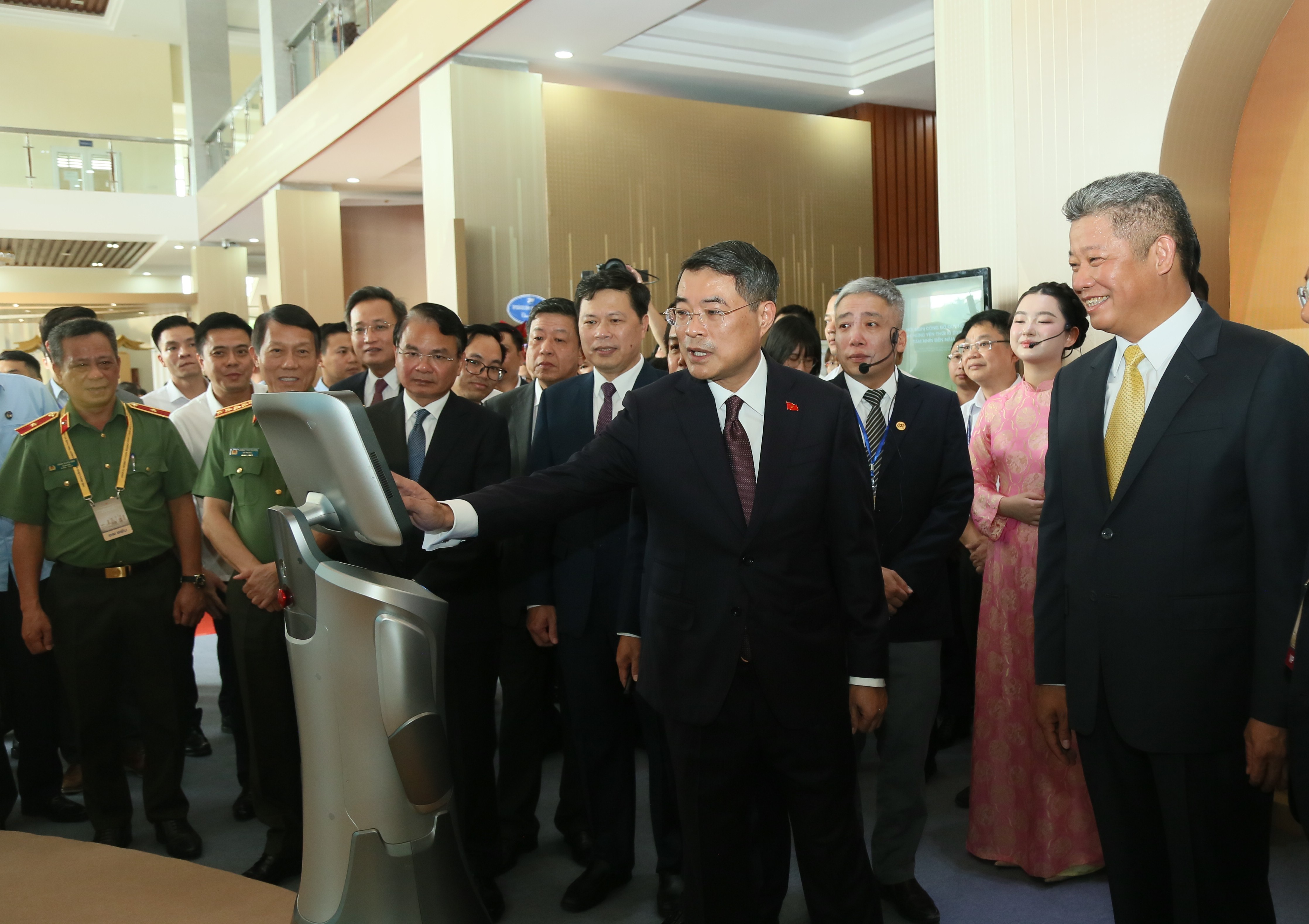
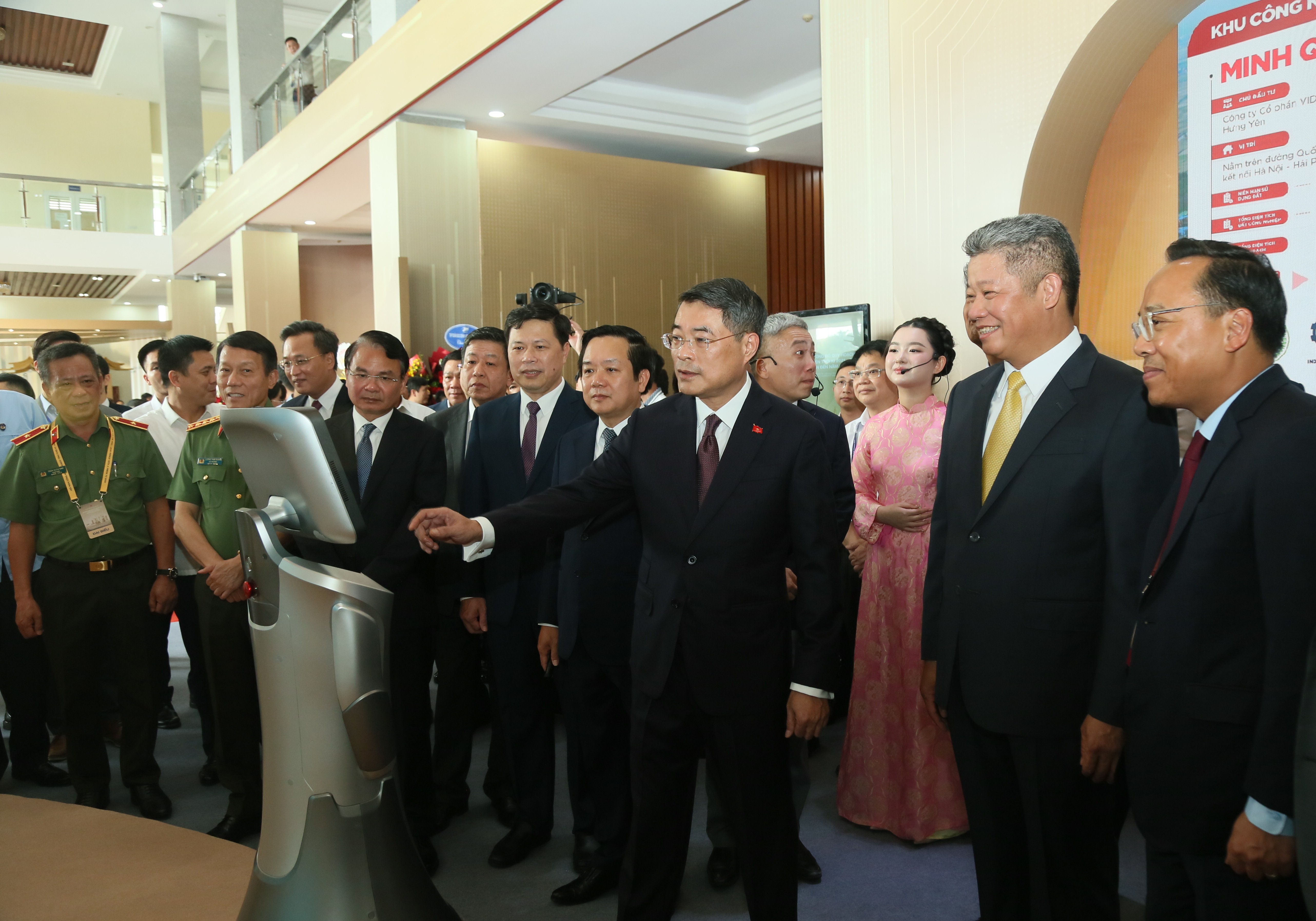
Prime Minister Le Minh Hung, Politburo member, and the Party and State leaders, provincial leaders, and other delegates, visit an exhibition booth showcasing the digital space of the Hung Yen Provincial Master Plan.
In the attendance were General Luong Tam Quang, Politburo member and Minister of Public Security; members of the Party Central Committee; current and former leaders of central-level commissions, ministries, and agencies; local government leaders; and representatives of diplomatic missions, international trade promotion organizations, associations, the business community, and both domestic and international investors.
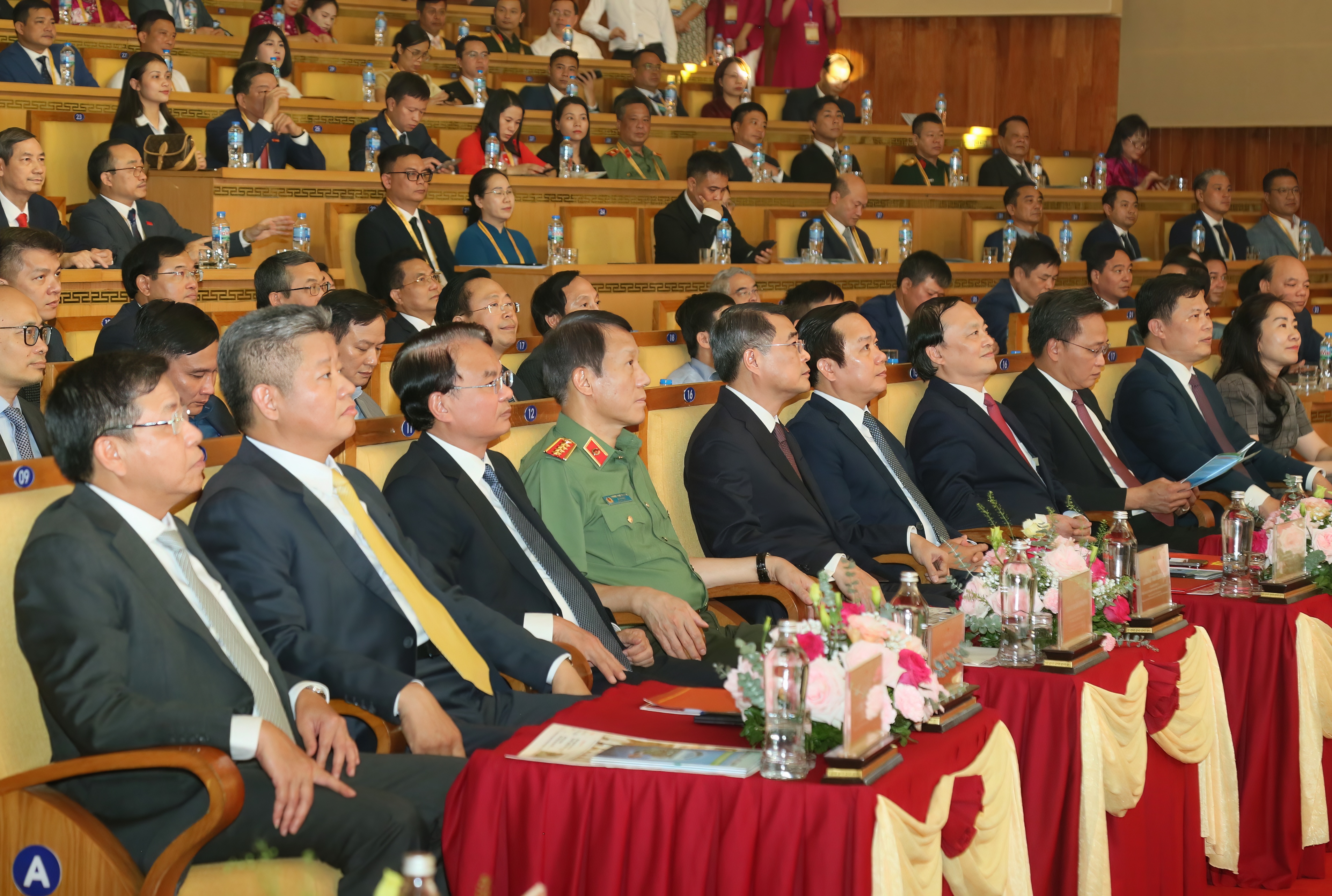
Prime Minister Le Minh Hung, Politburo member, and the Party and State leaders, provincial leaders, and other delegates at the conference to announce the Hung Yen Provincial Master Plan.
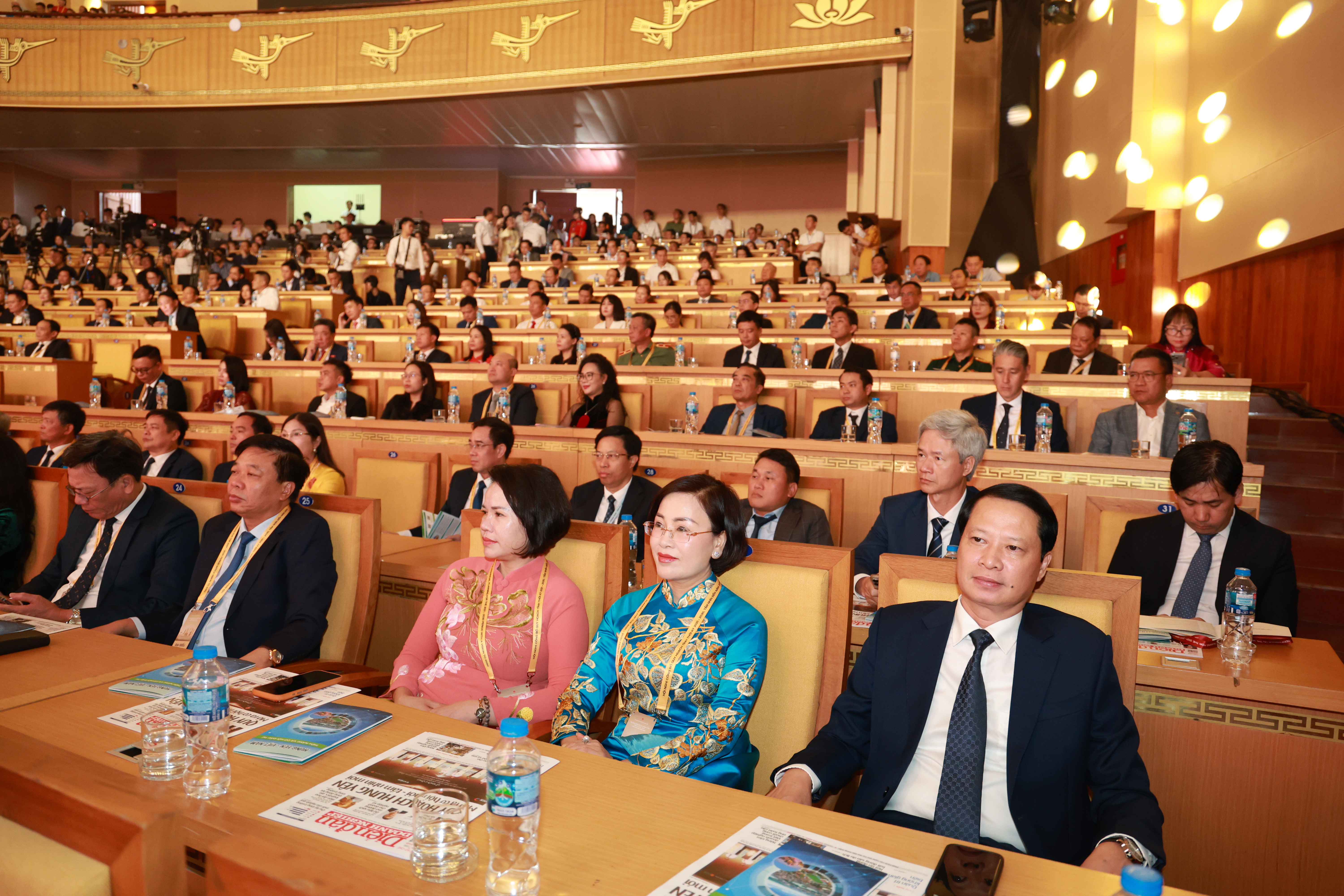
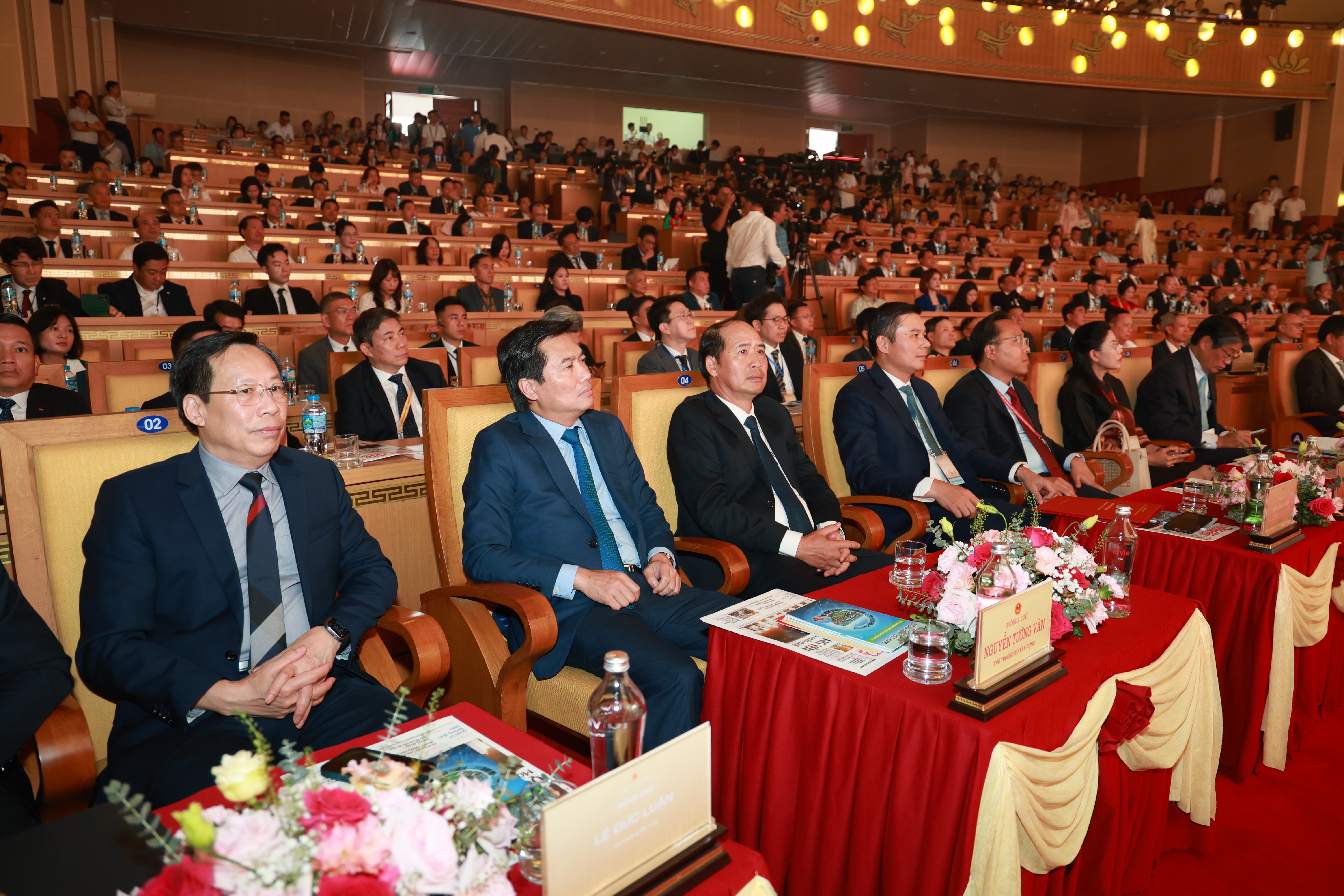
Provincial leaders and delegates attend the conference to announce the Provincial Master Plan.
Representing Hung Yen province were comrades: Pham Quang Ngoc, Member of the Party Central Committee and Secretary of the Provincial Party Committee; Tran Quoc Toan, Permanent Deputy Secretary of the Provincial Party Committee and Chairman of the Provincial Fatherland Front Committee; Nguyen Manh Quyen, Deputy Secretary of the Provincial Party Committee and Chairman of the Provincial People’s Committee; and members of the Provincial Party Committee’s Standing Board, leaders of the Provincial People’s Council, the Provincial People’s Committee, the Provincial Fatherland Front Committee, the provincial National Assembly Delegation, and heads of various departments, agencies, sectors, and localities.
Following the consolidation, Hung Yen has gained new space and momentum for development.
In his opening remarks, comrade Nguyen Manh Quyen, Deputy Secretary of the Provincial Party Committee and Chairman of the Provincial People’s Committee, emphasized that the conference to announce the Provincial Master Plan for the 2021–2030 period, with a vision toward 2050, is an event of particular significance, which marks a major milestone in the development of Hung Yen province following its consolidation, establishing a foundation for the province to leverage its potential and advantages to drive rapid and sustainable growth.
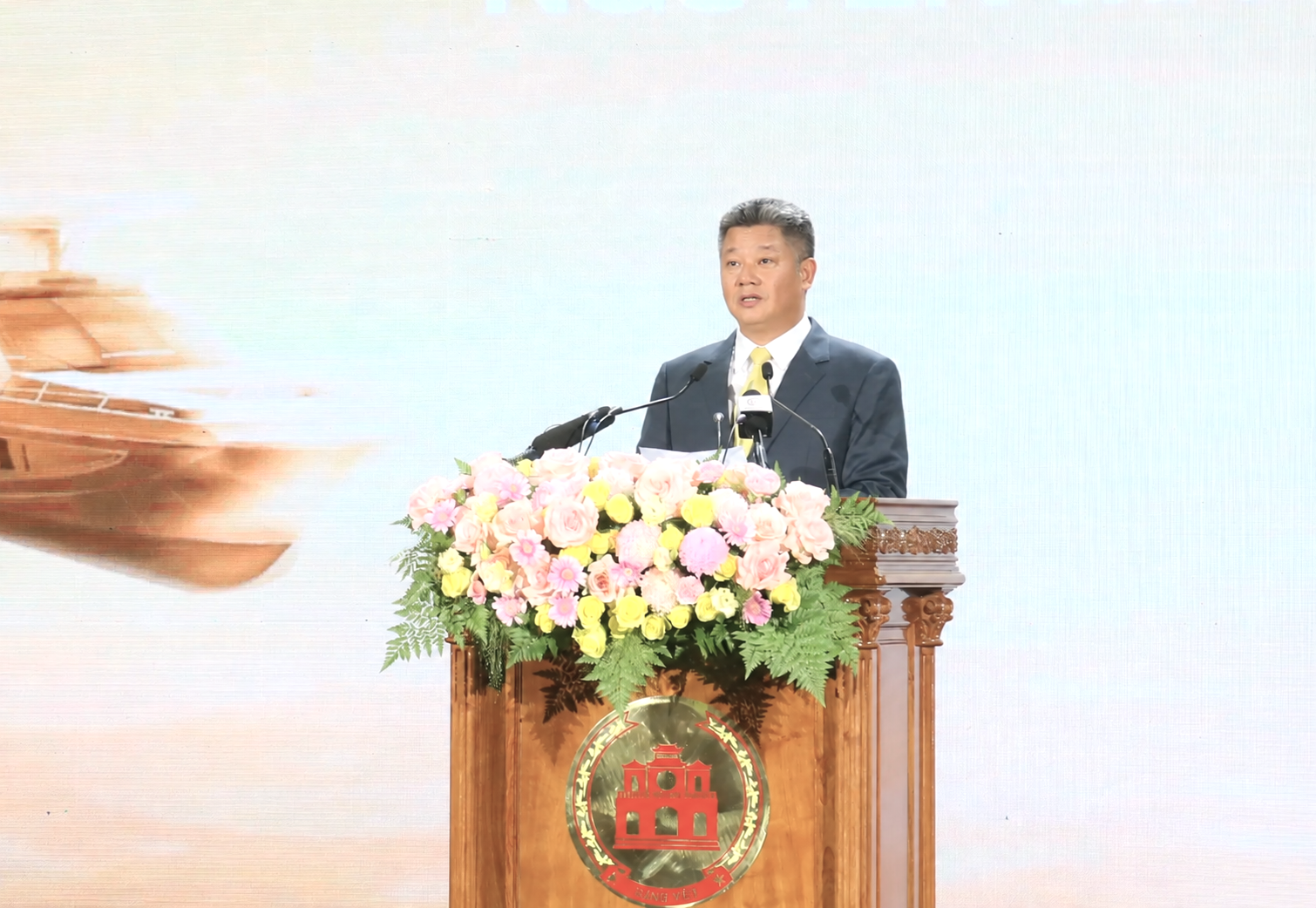
Comrade Nguyen Manh Quyen, Deputy Secretary of the Provincial Party Committee and Chairman of the Provincial People’s Committee, delivers the opening remarks at the conference.
Following the consolidation, Hung Yen province encompasses a total natural area of 2,638 km² of land and 487 km² of maritime space, with a population exceeding 3.5 million people and 104 commune-level administrative units. This expanded development space creates opportunities for connectivity and the mutual reinforcement of regional strengths, while providing room for the growth of industry, urban areas, services, logistics, and the maritime economy.
The province has focused on developing and finalizing its Provincial Master Plan, which outlines both immediate and long-term development orientations. The master plan defines three development zones: the northern, central, and southern regions of the province, while outlining the strategic development of various sectors, industries, transport networks, and infrastructure.
A key focus is placed on vital transport arteries running from the north to the south, as well as the routes connecting the province to other localities within the Red River Delta. Notably, this includes a major development corridor linking Hanoi to the coast, designed with a 180-meter cross-section and a maximum speed of 120 km/h, aimed at reducing travel time to under one hour. Another priority is a transport link connecting the provincial center to the Gia Binh airport and a planned airport in the south of Hanoi, featuring a 120-meter cross-section integrated with a railway line. Furthermore, the plan encompasses the development of the Hung Yen High-Tech Park and a project to restore and recreate the ancient Pho Hien. Following the establishment of this master plan, numerous domestic and foreign enterprises have explored the province’s investment and business environment, subsequently proposing new investment projects.
Regarding socio-economic development, the Deputy Secretary of the Provincial Party Committee and Chairman of the Provincial People’s Committee reported that the province’s economy maintained strong growth momentum during the first nine months of 2026. The Gross Regional Domestic Product (GRDP) grew by 11.22%, ranking the 7th out of 34 provinces and cities nationwide. Total budget revenue reached 52.875 trillion VND, equivalent to 62.8% of the annual estimate. As of September 30, 2026, the province has disbursed 26.222 trillion VND in public investment capital, ranking the 4th nationwide in terms of absolute value and achieving 63.5% of the target assigned by the Prime Minister.
During this period, the province has attracted 238 new projects and 154 capital expansion initiatives, with a total additional investment reaching 68.2 trillion VND and 1.9 billion USD. Significant attention continued to be directed toward the cultural sector and social welfare; the province has implemented various measures with the goal of eliminating poverty, based on the multidimensional poverty standards for the 2026–2030 period, by the end of 2026. The efforts to implement Resolution No. 57-NQ/TW have been a key focus, yielding substantial results.
Affirming that the process of developing the provincial master plan was conducted in a meticulous, systematic, scientific, and rigorous manner, Mr. Nguyen Manh Quyen, Deputy Secretary of the Provincial Party Committee and Chairman of the Provincial People's Committee, expressed his sincere gratitude for the guidance and attention provided by the Party Central Committee, the Government, and the National Assembly. He acknowledged the responsible contributions of ministries, central agencies, and departments; localities within the Red River Delta; experts, scientists, international partners, the business community, and the people of the province.
He emphasized that the announcement of the master plan is merely the first step; the true effectiveness of the plan must be demonstrated through concrete programs, projects, and tangible growth outcomes. Consequently, this conference also serves as an investment promotion event, extending an invitation for collaboration and signaling the province’s commitment to realizing its development vision. Guided by the message, "The success of businesses is the success of the province; the prosperity of investors is the development of Hung Yen province," the provincial authorities pledge to foster a developmental, action-oriented administration that works alongside businesses and investors. The province is committed to creating a transparent, secure, and favorable investment and business environment, ensuring that investors can operate with confidence for long-term, sustainable development.
The master plan identifies five strategic pillars and spatial development.
During the conference, Mr. Nguyen Le Huy, Member of the Provincial Party Committee’s Standing Board and Standing Vice Chairman of the Provincial People's Committee, announced the decisions regarding the establishment of the Hung Yen High-Tech Park and the classification of Hung Yen province as a Class I provincial-level administrative unit, the approval of the adjusted Master Plan for Hung Yen province for the 2021–2030 period, with a vision toward 2050.
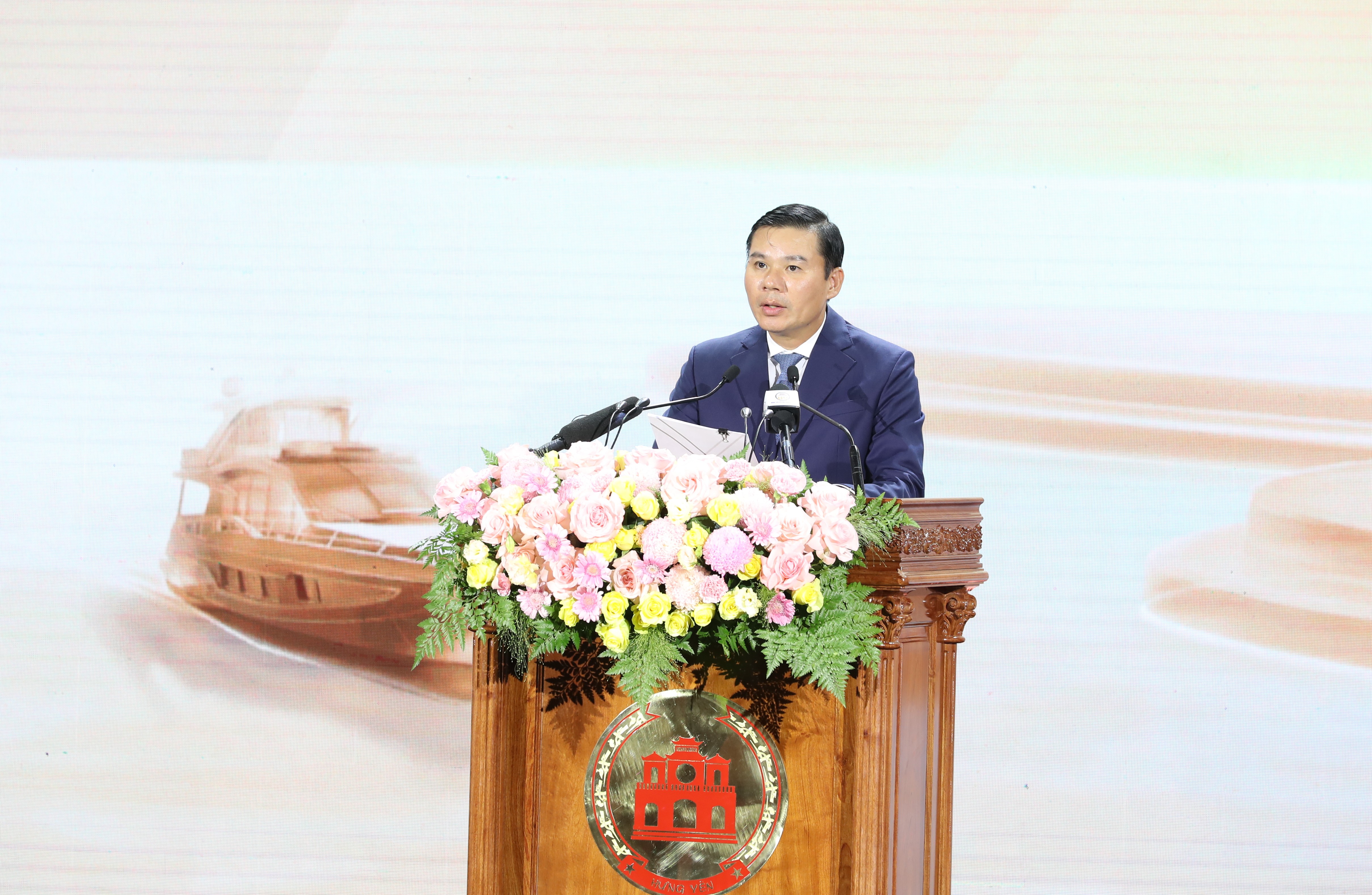
Mr. Nguyen Le Huy, Member of the Provincial Party Committee’s Standing Board and Standing Vice Chairman of the Provincial People's Committee, announces the decisions.
Pursuant to Decision No. 1499/QD-TTg dated August 6, 2026, issued by the Prime Minister, the Hung Yen High-Tech Park, under the authority of the Hung Yen Provincial People's Committee, spans an area of 496.1 hectares across the communes of Hoan Long and Viet Yen.
The High-Tech Park is tasked with the research, application, and development of high technologies and strategic technologies; the manufacturing of high-tech products; and the provision of services, incubation, training, and technology transfer in accordance with regulations. The establishment of this High-Tech Park creates favorable conditions for attracting investment, fostering research, application, and technology transfer, and integrating science and training with production. It further contributes to the modernization of the economic structure, while enhancing productivity, the quality of growth, and the province's overall competitiveness.
According to Decision No. 930/QD-BNV dated August 6, 2026, issued by the Minister of Home Affairs, Hung Yen province has been classified as a Class I provincial-level administrative unit. This serves as a foundation for the province to continue fulfilling the criteria and conditions for development, in line with its goal of eventually becoming a centrally-run city.
Previously, on February 27, 2026, the Chairman of the Provincial People's Committee issued Decision No. 579/QĐ-UBND, approving the adjusted Master Plan for Hung Yen province for the 2021–2030 period, with a vision toward 2050.
According to the Master Plan, by 2030, Hung Yen aims to become a province with a dynamic economy, characterized by rapid and sustainable development driven by science, technology, innovation, digital transformation, and green growth. The province seeks to ensure energy security, build a harmonious society, preserve and promote its cultural identity, and protect the ecological environment.
The province’s development orientation includes building synchronous and modern infrastructure; managing and utilizing resources efficiently; enhancing capacity for climate change adaptation and disaster prevention; fostering comprehensive socio-cultural development to improve the quality of life for its residents; ensuring national defense and security; and expanding international integration.
The key targets in 2030 include: an average annual Gross Regional Domestic Product (GRDP) growth rate of 10–11% for the 2026–2030 period, with an aspiration to exceed 11% annually; a GRDP per capita of over 209 million VND (approximately 8,000 USD); a total GRDP scale of approximately 686 trillion VND; and an urbanization rate exceeding 55%.
To realize these goals, the Master Plan identifies five primary development pillars as follows: the synchronous development of socio-economic infrastructure, with a focus on transport infrastructure, industrial zones, industrial clusters, and economic zones; and the development of clean, ecological agriculture that utilizes high technology and organizes large-scale commodity production; developing urban, commercial, tourism, and service systems; advancing clean energy, such as wind power, LNG-based power, and green hydrogen; and fostering a maritime economy based on a modern, multi-sectoral, and multidisciplinary economic zone model.
Regarding the spatial organization for socio-economic development, the Master Plan defines three economic zones, two development corridors, three vertical axes, and four horizontal axes. The northern dynamic zone, strategically located at the southeastern gateway to the capital, Hanoi, is envisioned as a hub for high-tech industry, urban development, services, and logistics; and serves as a commercial gateway connecting the Capital Region with the coastal plains, acting as a catalyst for development across the entire province. The central zone functions as the administrative, political, cultural, and educational heart of the province, while also serving as a vital link between the northern dynamic zone and the coastal areas, facilitating the coordination and spread of socio-economic development across the region. The eastern and southeastern coastal zone is designated as a new strategic growth engine, focused on integrated maritime economic development, encompassing energy industries, manufacturing and processing, port-related logistics, urban and maritime services, as well as eco-tourism and seaside resorts.
The Master Plan outlines development directions for key sectors, including industry, services, agriculture, science, technology, innovation, culture, education, healthcare, national defense, and security. Furthermore, it proposes nine groups of implementation solutions, focusing on investment capital, human resources, environmental protection, science, technology, and digital transformation, regional integration, urban and rural management, infrastructure, the maritime economy, and the energy industry.
The Master Plan must pave the way and spearhead development.
In his remarks at the conference, Deputy Prime Minister Le Minh Hung emphasized the need for a robust transformation in the planning process, shifting the focus from merely exploiting existing resources toward creating, guiding, unlocking, and activating new drivers for development. To organize a unified development space that maximizes the potential, advantages, and unique identity of each region and locality, while strengthening linkages and spillover effects among regions, growth poles, economic corridors, urban networks, and economic hubs.
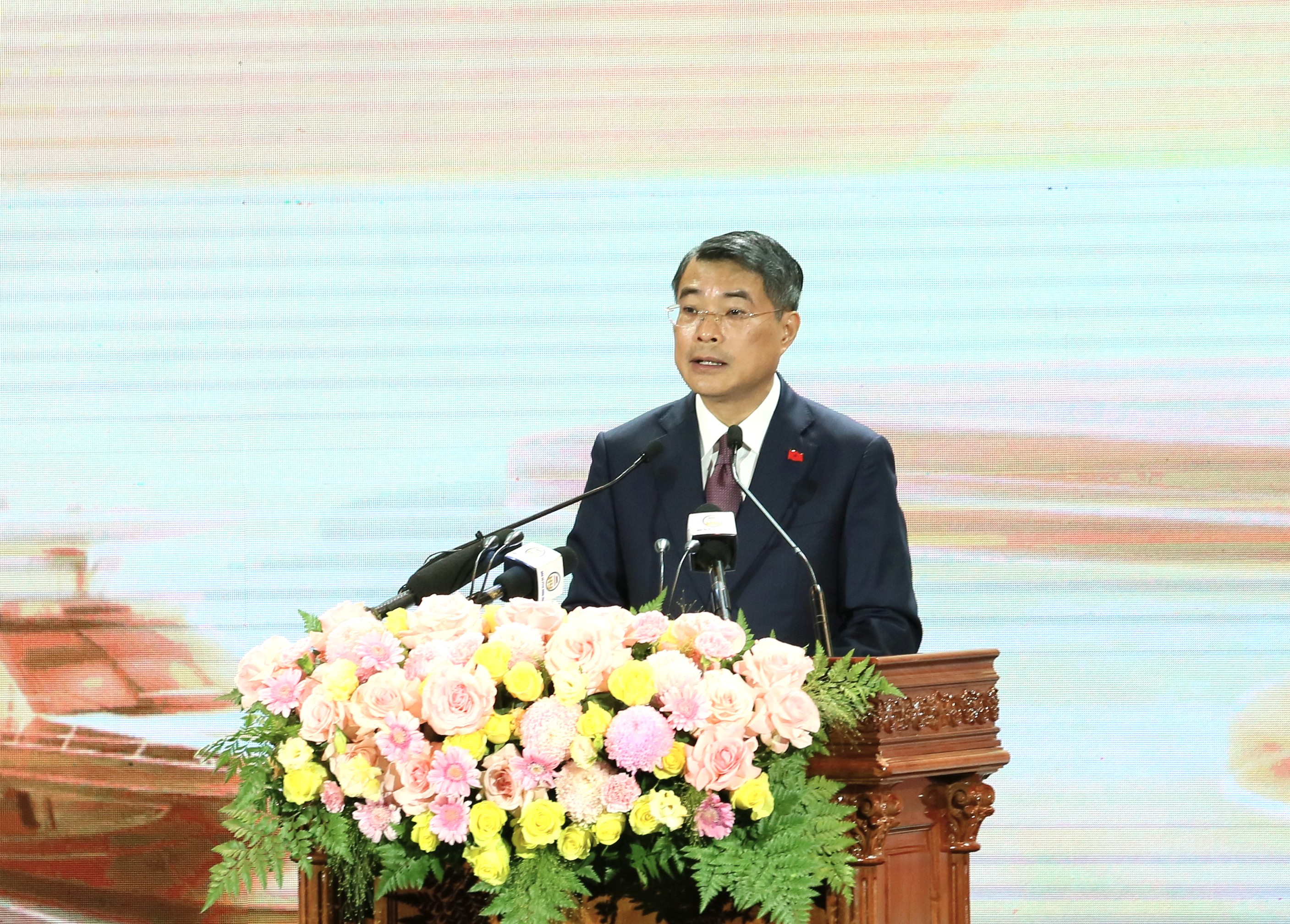
Prime Minister Le Minh Hung, Politburo member, delivers directive remarks at the conference.
According to the Prime Minister, the merger of Hung Yen and Thai Binh provinces, effective since July 1, 2025, not only expands administrative boundaries but also creates a new development space. This integration brings together complementary potentials and strategic advantages, resulting in a larger economic scale, a more diverse structure, and broader room for development. Hung Yen enjoys a favorable geo-economic location, with strong connectivity to the capital, Hanoi, and major industrial and service hubs in the North. Furthermore, the combined territory offers access toward the sea, opening up opportunities for the development of a maritime economy, industry, energy, and logistics. Inter-regional infrastructure is becoming increasingly robust, supported by key transport arteries such as the Hanoi–Hai Phong–Quang Ninh expressway, the Ring Road No. 4 (Capital Region), the Ninh Binh–Hai Phong expressway, and other strategic routes, all of which facilitate connectivity between industrial zones, urban areas, seaports, and major markets.
The province possesses a solid industrial foundation, anchored by key industrial zones such as Pho Noi A, Thang Long II, Lien Ha Thai, Tien Hai, and VSIP Thai Binh. It is well-positioned to develop high-tech industries, supporting industries, manufacturing and processing, and green industry. Additionally, the province holds significant strengths in commercial agriculture, high-tech farming, and aquaculture.
The Prime Minister emphasized that Hung Yen’s fundamental and sustainable advantages lie in its people, a population defined by a rich cultural and intellectual heritage, a revolutionary tradition, a love for learning, a compassionate spirit, diligence, dynamism, creativity, solidarity, and a strong aspiration to excel. The convergence of its people, culture, strategic location, and development potential provides a solid foundation for the province to effectively harness new spaces and cultivate new drivers of growth.
On behalf of the Government, the Prime Minister commended and congratulated the Party Committee, the local authorities, and the people of Hung Yen province for their efforts and the achievements they have attained in recent times.
The Prime Minister affirmed that while a sound development plan is a necessary condition, its effective implementation is the decisive factor. Regardless of how visionary or ambitious a plan may be, it cannot generate practical value unless it is translated into concrete programs, projects, and resources that yield tangible results, which ultimately transforming Hung Yen into a modern hub for industry and services, a civilized urban center, and a region characterized by a thriving maritime economy, as well as green and sustainable growth.
Regarding the development strategy, the Prime Minister directed Hung Yen province to focus on four key priorities.
Firstly, the province must fully leverage its geo-economic position, utilizing regional integration as a vital mechanism to expand its development space, mobilize resources, and generate growth momentum. This includes proactively deepening connections with Hanoi, Hai Phong, Bac Ninh, Ninh Binh, and other localities in the region, while effectively participating in regional production, supply, and logistics chains, as well as the inter-regional urban network.
Secondly, organize the development space in an integrated, multi-center, and multi-polar manner, leveraging the distinct advantages and complementary nature of different regions. The development of the three economic zones, two development corridors, and strategic axes must be based on the comparative advantages and specific functions of each area. Resources should be concentrated on key drivers with significant spillover potential, avoiding an approach characterized by uniform or overly dispersed investment.
Thirdly, shift the mindset from one of mere administration to one of service and facilitation; transition from a growth model primarily reliant on capital, land, labor, and the exploitation of existing advantages to the one driven by science, technology, innovation, digital transformation, and high-quality human resources.
Fourthly, place people at the center, as both the focus and the primary agents of development, with culture serving as the foundation and an endogenous driving force. To ensure harmonious development across economic, social, and environmental spheres, while simultaneously strengthening national defense and security and enhancing the effectiveness of external relations.
To realize the master plan, the Prime Minister has directed a focus on five key groups of tasks and solutions.
Firstly, implement the master plan with an integrated, unified approach and a long-term vision. The province must urgently translate the plan into concrete programs, schemes, and projects; establish priorities, roadmaps, and resource allocation, ensuring clear assignment of personnel, tasks, and responsibilities, along with defined timelines and expected outcomes. Furthermore, it is essential to integrate and connect development spaces, clearly defining the roles and functions of each region, center, and economic corridor. This is to prevent a situation that, despite administrative consolidation, development efforts remain fragmented.
The Prime Minister has called for greater openness and transparency, as well as the digitization of planning data. To strengthen discipline and order; overcome "short-termism" (a focus on immediate, term-limited gains) and the tendency toward fragmented, thinly spread investment. Planning must stay one step ahead, paving the way and guiding development, rather than trailing behind individual projects. Planning adjustments must not be used merely to legitimize short-term interests.
Secondly, achieve breakthroughs in strategic infrastructure and regional connectivity. The province should prioritize transport links to Hanoi, Hai Phong, Bac Ninh, and Ninh Binh, as well as the North-South corridors within the province, connecting the northern region to the capital, the southern area, and the coastal zone. To strengthen the integration of industrial zones, economic zones, urban centers, production hubs, and service sectors with the expressway network, seaports, and major transport hubs. Given limited resources, it is essential to carefully select priority projects, focusing on those with significant spillover effects, the capacity to remove bottlenecks, and the potential to open up new space for development.
Thirdly, develop modern, high-tech industry and high-value-added economic sectors. The province should foster supporting industries, manufacturing, processing, and "green" industry. Foreign direct investment (FDI) should be attracted selectively, using technological sophistication, value-added potential, capacity for integration with domestic enterprises, and environmental protection standards as key criteria.
Concurrently, develop high-value-added service sectors, particularly logistics, commerce, industrial support services, and cultural or eco-tourism, while harnessing the potential of the maritime economy in a manner that ensures environmental protection, national defense, and security. The province must shift its mindset from mere agricultural production to an "agricultural economy", promoting high-tech and ecological farming, deep processing, brand development, and increased incomes for farmers; focusing on training high-quality human resources that align with the needs of businesses and the labor market.
Fourthly, carry out substantive reforms of administrative procedures and improve the investment and business environment. The province must review and streamline administrative procedures, while promptly addressing obstacles and challenges related to land, investment, construction, and site clearance. It should build a two-tier local government, that acts as a facilitator for development; the one that is principled, effective, and efficient, remains closely connected to the people, and serves both the public and the business community. Simultaneously, the province must cultivate a contingent of officials who are competent, responsible, disciplined, and possess the courage to think, act, and take accountability for the common good, using the satisfaction of citizens and businesses, as well as the actual results in fulfilling assigned tasks, as the benchmarks for evaluating these officials.
Fifthly, foster the development of culture and people, protect the environment, and enhance the quality of life for the population. The Prime Minister emphasized that the ultimate goal of development is the people, ensuring that citizens truly benefit from the fruits of progress. This includes preserving and promoting the cultural, historical, and traditional values of Hung Yen province, while building a living environment that is green, clean, safe, and civilized.
Regarding the objective of becoming a centrally-run city by 2030, the province must conduct a comprehensive review of all relevant criteria and standards, clearly identify those that have already been met and those that remain to be fulfilled. To develop roadmaps, tasks, projects, and specific initiatives; prioritize resources for the completion of urban infrastructure; enhance the quality of governance, public services, and the residents' quality of life; and strive with the utmost determination to achieve the set goals well before 2030.
The Prime Minister requested that ministries and central agencies continue to provide support, close coordination, and guidance to the province in the implementation of its master plan. He urged them to promptly address any difficulties or obstacles, thereby creating favorable conditions for Hung Yen to mobilize and effectively utilize development resources.
Addressing the business community and investors, the Prime Minister encouraged them to view Hung Yen not only in terms of its existing advantages but also through the lens of the new development space currently taking shape, a space with the potential for direct connectivity to the capital, Hanoi, major industrial hubs, and the maritime-oriented economic zone. The Government remains committed to supporting localities and businesses by focusing on refining institutional frameworks, improving the investment and business environment, and safeguarding the legitimate rights and interests of citizens, enterprises, and investors, all while unlocking and efficiently deploying resources for development.
The Prime Minister expressed his confidence that, building upon its rich cultural and revolutionary heritage, characterized by a spirit of solidarity, diligence, creativity, a thirst for knowledge, and a strong aspiration to excel and leveraging its strategic location and inherent advantages, Hung Yen will successfully harness its new development space. He anticipates that the province will achieve significant breakthroughs in the near future, evolving into a dynamic growth pole and a hub for modern industry and services, with a thriving maritime economy, thereby making an increasingly vital contribution to the nation’s overall development.
Hung Yen is determined to translate its master plan into reality through concrete results.
On behalf of the Provincial Party Committee, the Provincial People’s Council, the Provincial People’s Committee, and the Provincial Fatherland Front Committee, Mr. Pham Quang Ngoc, member of the Party Central Committee and Secretary of the Provincial Party Committee, expressed his sincere gratitude and affirmed that the province would fully and earnestly incorporate the Prime Minister’s directives. The affirmation of four development perspectives and five key sets of tasks and solutions serves as a vital guide for the province to implement its master plan, fostering rapid and sustainable development while contributing to the advancement of the Red River Delta region and the country as a whole.
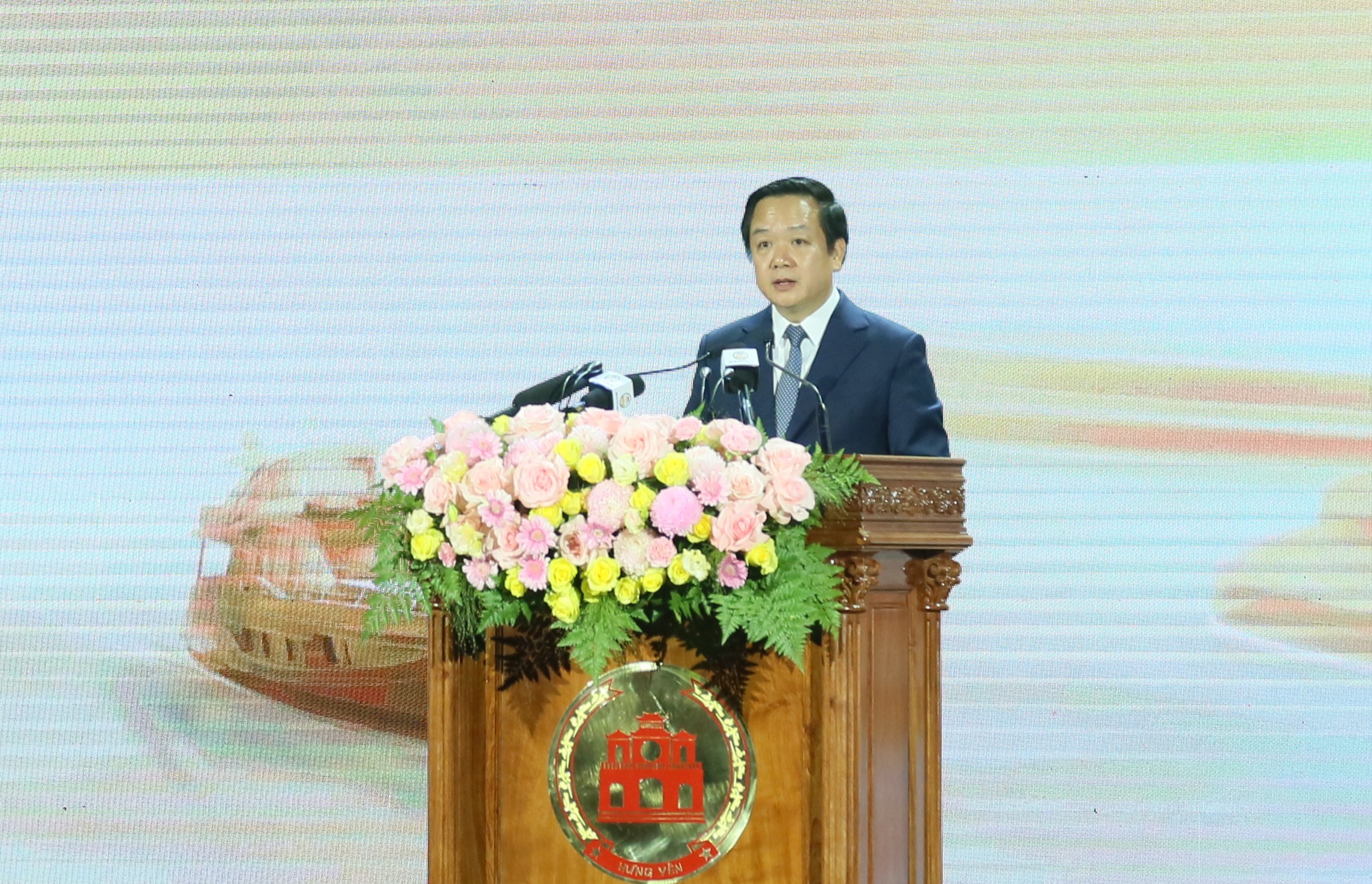
Mr. Pham Quang Ngoc, member of the Party Central Committee and Secretary of the Provincial Party Committee, delivers remarks acknowledging the guidance provided by the Prime Minister.
The Provincial Party Secretary commended the sense of responsibility, proactiveness, and creativity demonstrated by the entire political system, the provincial leadership, experts, scientists, consultants, organizations, and individuals. He also expressed appreciation for the support from central-level agencies, ministries, and sectors, as well as the contributions of the business community, entrepreneurs, international organizations, and the general public throughout the development and implementation of the provincial master plan.
Emphasizing that a master plan only holds true value when it is realized through concrete projects, initiatives, and tangible socio-economic development outcomes, ultimately ensuring a prosperous and happy life for the people, the Provincial Party Secretary underscored the firm commitment of the Provincial Party Committee, the local government, all sectors and levels, the entire political system, the business community, and the people of the province. He called for continuous unity, resilience, and wisdom; the leveraging of opportunities and internal strengths; a focus on innovation; the overcoming of challenges; and a dedicated effort to achieve the goals and vision outlined in the master plan.
Hung Yen province will prioritize building a dynamic economy rooted in science, technology, innovation, and digital transformation, while fostering a harmonious society, preserving and promoting cultural identity, and protecting the ecological environment, to develop Hung Yen into a city of culture, civilization, and modernity, rich in identity and directly under the central government by 2030, joining the rest of the nation in striding confidently into an era of prosperity and flourishing growth.
The Provincial Party Secretary expressed sincere gratitude to the Party Central Committee, the Government, the National Assembly, the Central Committee of the Vietnam Fatherland Front, and the leaders of the Party and State for their guidance and direction provided to the province. He also expressed a desire for continuous support from the central authorities, coordination from central-level departments, ministries, agencies, and other localities, the partnership from the business community and investors, and the consensus of the people from all walks of life to successfully achieve the established development goals.
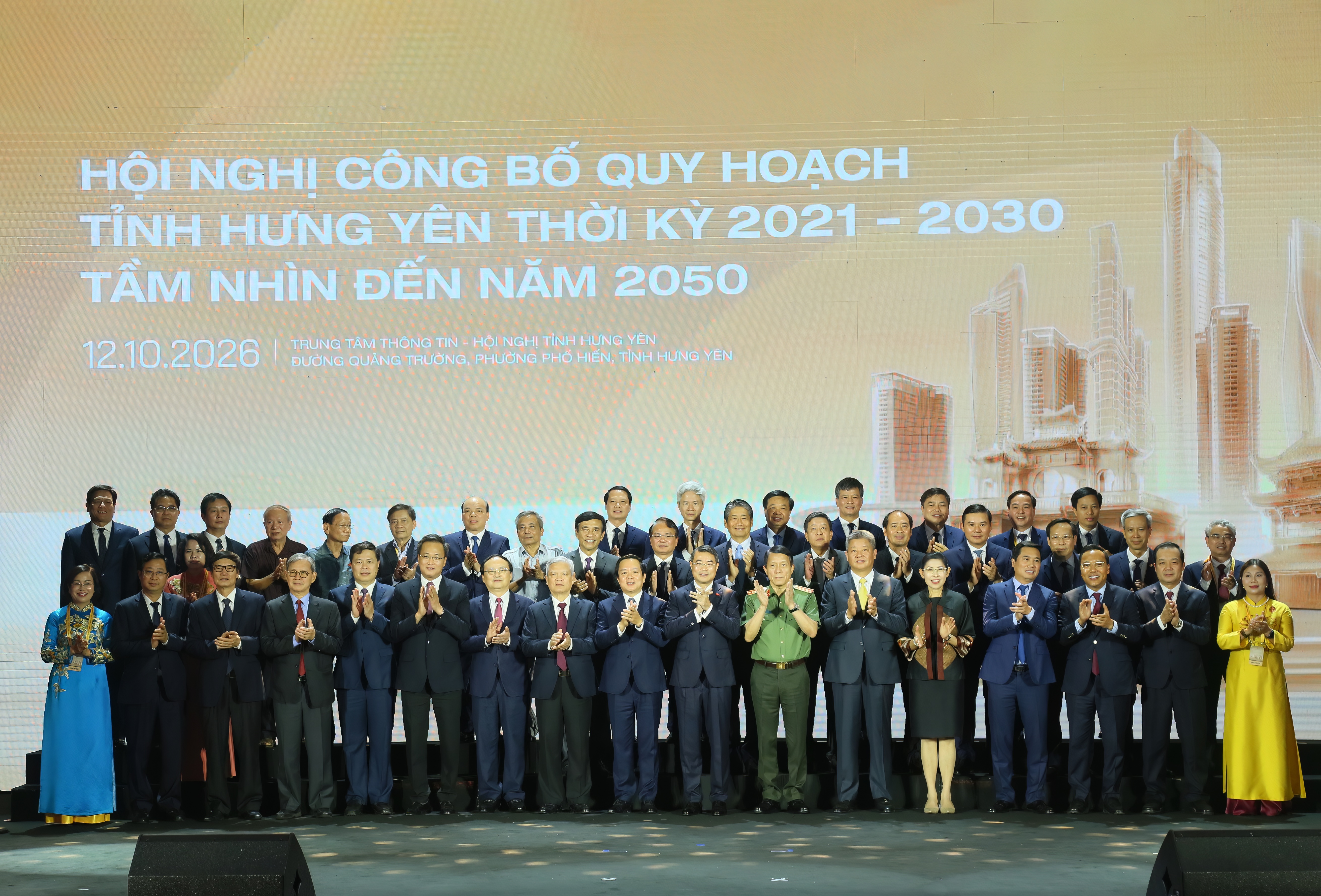
Comrade Le Minh Hung, Politburo member, and the Party and State leaders, provincial leaders, and delegates, pose for a commemorative photograph at the conference.
During the conference, representatives of diplomatic missions, as well as domestic and foreign businesses and investors, spoke highly of the Hung Yen Provincial Master Plan for the 2021–2030 period, with a vision toward 2050. They affirmed their commitment to further strengthening cooperation and expanding investments in Hung Yen. On this occasion, the province honored businesses, entrepreneurs, and investors who have demonstrated outstanding achievements and made significant contributions to the province’s socio-economic development.
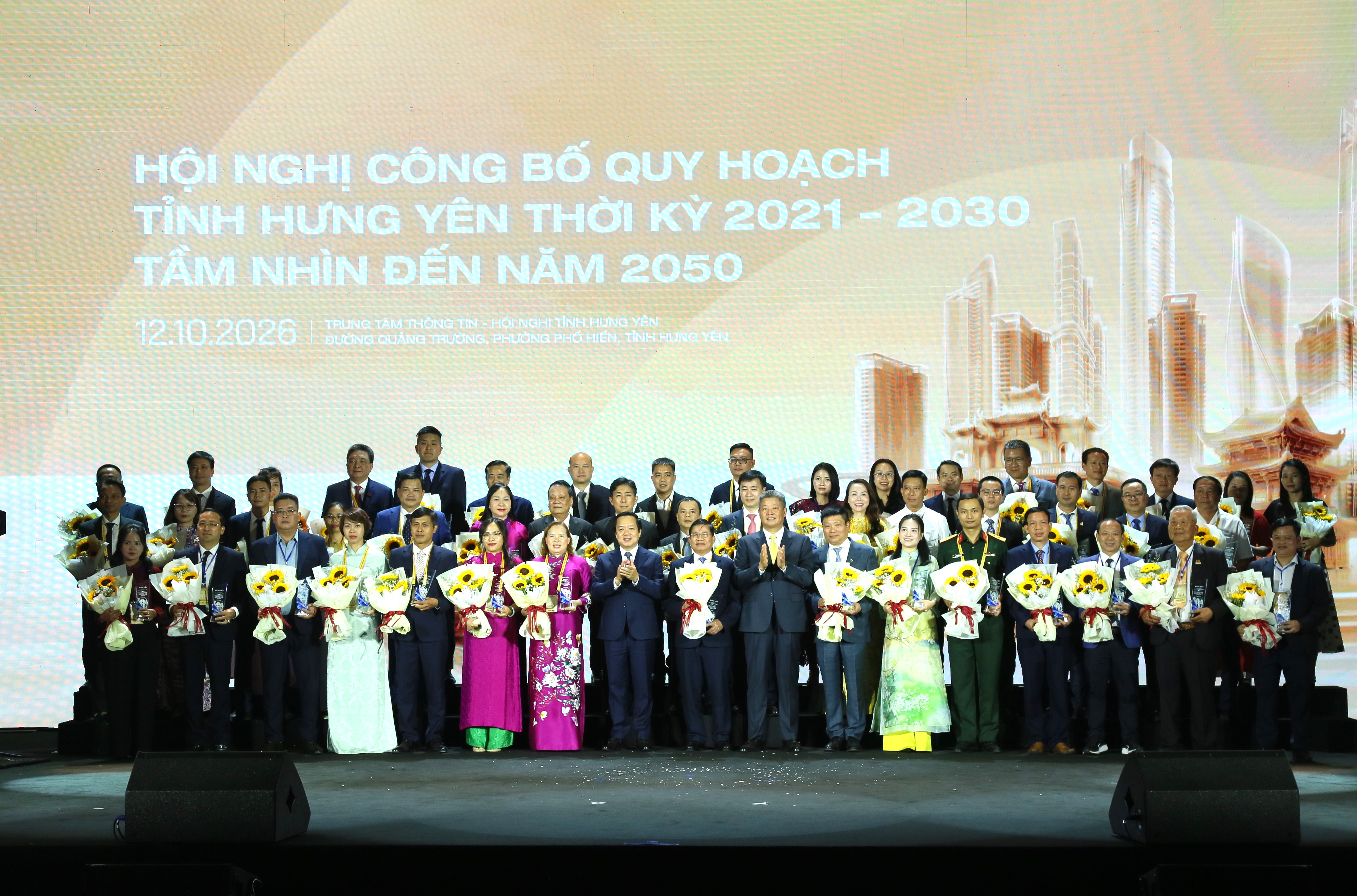
Mr. Pham Quang Ngoc, member of the Party Central Committee and Secretary of the Provincial Party Committee; Mr. Nguyen Manh Quyen, Deputy Secretary of the Provincial Party Committee and Chairman of the Provincial People's Committee, present flowers and gifts to honor enterprises with outstanding achievements and contributions to the province's socio-economic development.